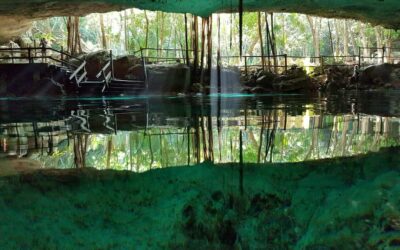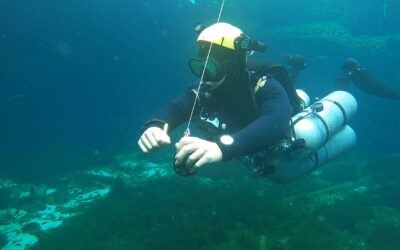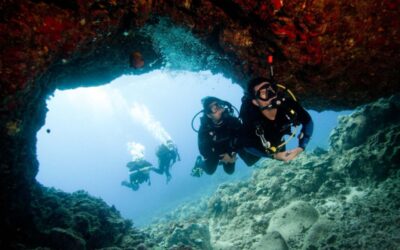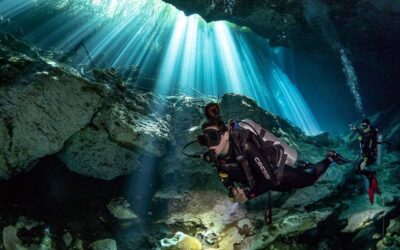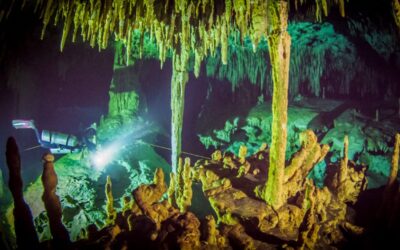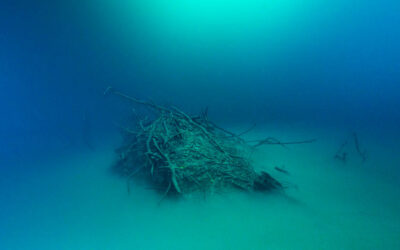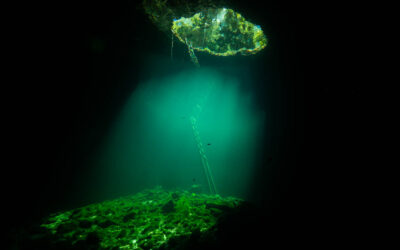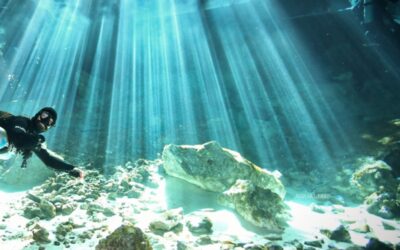
A halocline is the layer where freshwater and saltwater meet. The difference in salinity between the two types of water creates a unique underwater phenomenon that can distort light and visibility. Haloclines are commonly found in coastal caves, estuaries, and the cenotes of Mexico’s Yucatán Peninsula.
For scuba divers, a halocline is one of the most fascinating sights underwater. Looking through it can feel like looking through a shimmering heat haze or a mirage in the desert. The effect is caused by light bending differently as it passes through water with different salt concentrations.
Table of Contents

What Is a Halocline?
A halocline is a boundary layer in the water where salinity changes rapidly with depth. In simple terms, it is the place where freshwater and saltwater meet.
The word comes from the Greek words:
- Halo = salt
- Cline = slope or gradient
Together, the term describes a gradual change in salt concentration between two bodies of water.
In the cenotes of Mexico, rainwater filters through the limestone and forms a layer of freshwater above. Beneath this freshwater lies denser saltwater that has entered from the Caribbean Sea through underground cave systems. Where these two layers meet, a halocline forms.
What Happens When Freshwater and Saltwater Meet?
When freshwater and saltwater meet, they do not immediately mix together. Instead, they often form distinct layers because saltwater is denser than freshwater.
At the boundary between these layers, light is refracted differently as it passes through each water type. This creates the famous blurry, distorted effect that divers see when looking through a halocline.
The visual effect can be dramatic. Rocks, cave passages, and even other divers can appear stretched, wavy, or completely distorted. The closer you are to the halocline, the stronger the effect becomes.

What Is It Called When Freshwater and Saltwater Meet?
The place where freshwater and saltwater meet is called a halocline.
Many people search for:
- What is it called when freshwater and saltwater meet?
- Where freshwater and saltwater meet?
- Saltwater and freshwater meet underwater?
The answer is the same: a halocline.
While haloclines can be found in estuaries and coastal environments around the world, some of the most spectacular examples occur in the flooded cave systems of the Yucatán Peninsula.
What Does a Halocline Look Like Underwater?
A halocline often appears as a shimmering, blurry layer in the water.
From a distance it can look like:
- A heat haze rising from hot pavement
- A mirage in the desert
- A sheet of liquid glass
- Rippling waves suspended underwater
When a diver swims through a halocline, the movement can temporarily mix the layers and dramatically reduce visibility. The water may appear cloudy and distorted until the freshwater and saltwater separate again.
For photographers, haloclines can create some of the most beautiful and unusual underwater images found anywhere in the world.
What Is the Difference Between a Halocline and a Thermocline?
A halocline and a thermocline are often confused, but they are different phenomena.
Halocline
A halocline is caused by a change in salinity.
- Freshwater and saltwater meet
- Density changes because of salt concentration
- Creates visual distortion
- Common in cenotes and coastal caves
Thermocline
A thermocline is caused by a change in temperature.
- Warm water sits above colder water
- Density changes because of temperature
- Often noticeable as a sudden temperature change
- Common in lakes, oceans, and some cenotes

Can a Cenote Have Both?
Yes.
Many cenotes contain both a thermocline and a halocline. Divers may first notice a change in temperature and then encounter the stronger visual distortions created by the halocline below.
In deeper cenotes such as The Pit and Angelita, both phenomena can occur during the same dive.
Are Cenotes Freshwater or Saltwater?
One of the most common questions people ask is whether cenotes are freshwater or saltwater.
The answer depends on depth and location.
Most cenotes contain freshwater near the surface because rainwater filters through the limestone and accumulates underground.
However, many of the deeper cenotes in the Riviera Maya also contain saltwater beneath the freshwater layer. This saltwater originates from the Caribbean Sea and enters the cave systems through underground connections.
As a result:
- Shallow cenotes are usually freshwater.
- Deep cenotes may contain both freshwater and saltwater.
- Coastal cenotes often have larger haloclines.
- Inland cenotes are more likely to remain entirely freshwater.
Why Are Haloclines Common in the Yucatán Peninsula?
The Yucatán Peninsula sits on a vast limestone platform containing one of the largest underwater cave systems in the world.
Over thousands of years, rainwater dissolved the limestone and created extensive cave networks beneath the jungle. These caves eventually flooded, forming the cenotes that divers visit today.
Because the region lies close to the Caribbean Sea, saltwater enters the deeper sections of the cave systems while freshwater accumulates above. This natural arrangement creates ideal conditions for haloclines to form.
The result is one of the most unique diving environments on Earth.
Best Cenotes to See a Halocline
Several cenotes near Tulum offer spectacular haloclines.
The Pit
The Pit features dramatic light beams, deep water, and a stunning halocline that many divers consider one of the most beautiful in Mexico.
Angelita
Angelita is famous for its hydrogen sulfide cloud, but it also contains a strong halocline below the freshwater layer.
Casa Cenote
Casa Cenote is a Beautiful cenote surrounded by mangroves with a nice mix of marine and cave features.
Is a Halocline Dangerous?
A halocline itself is not dangerous.
However, it can temporarily reduce visibility when disturbed. In overhead environments such as caves, proper buoyancy control is important to avoid mixing the layers unnecessarily.
For recreational divers visiting cenotes with qualified guides, haloclines are generally viewed as one of the highlights of the dive rather than a hazard.
Final Thoughts
A halocline is the layer where freshwater and saltwater meet. The difference in salinity creates one of the most striking underwater effects found anywhere in nature. Whether you are exploring a coastal cave, diving in a cenote, or simply learning about underwater science, understanding haloclines helps explain some of the most beautiful phenomena beneath the surface.
The cenotes of the Yucatán Peninsula offer some of the best opportunities in the world to experience a halocline firsthand. For many divers, seeing this shimmering underwater mirage is a highlight they never forget.
What is a halocline?
A halocline is the layer where freshwater and saltwater meet, creating a rapid change in salinity and a distinctive underwater visual effect.
What causes a halocline?
A halocline forms when less dense freshwater sits above denser saltwater and the two layers do not fully mix.
Are cenotes freshwater or saltwater?
Most cenotes contain freshwater near the surface, while deeper cenotes often contain saltwater below, separated by a halocline.
What is the difference between a halocline and a thermocline?
A halocline is caused by a change in salinity, while a thermocline is caused by a change in temperature.
Can divers see a halocline?
Yes. Divers often see a shimmering or distorted visual effect when looking through or swimming through a halocline.