Choosing the best scuba diving fins isn’t simply about finding the pair that produces the most power.
A good fin should match the type of diving you do, the kicking techniques you use and, importantly, where you expect your diving to take you in the future.
For recreational diving in warm, open water, almost any reasonable pair of fins can get the job done. Once you move towards sidemount, technical diving or cave diving, however, your choice of fins becomes much more important.
As a cave diving instructor in Tulum, I’ve used many different fins over thousands of dives. I’ve also taught divers using everything from traditional paddle fins to split fins and highly flexible recreational designs.
That experience has changed what I look for in a fin.
I’m not particularly interested in how impressive a pair of fins looks when it comes out of the box.
Everything works when it’s new.
What interests me is whether it still works after 500, 1,000 or even 2,000 dives.
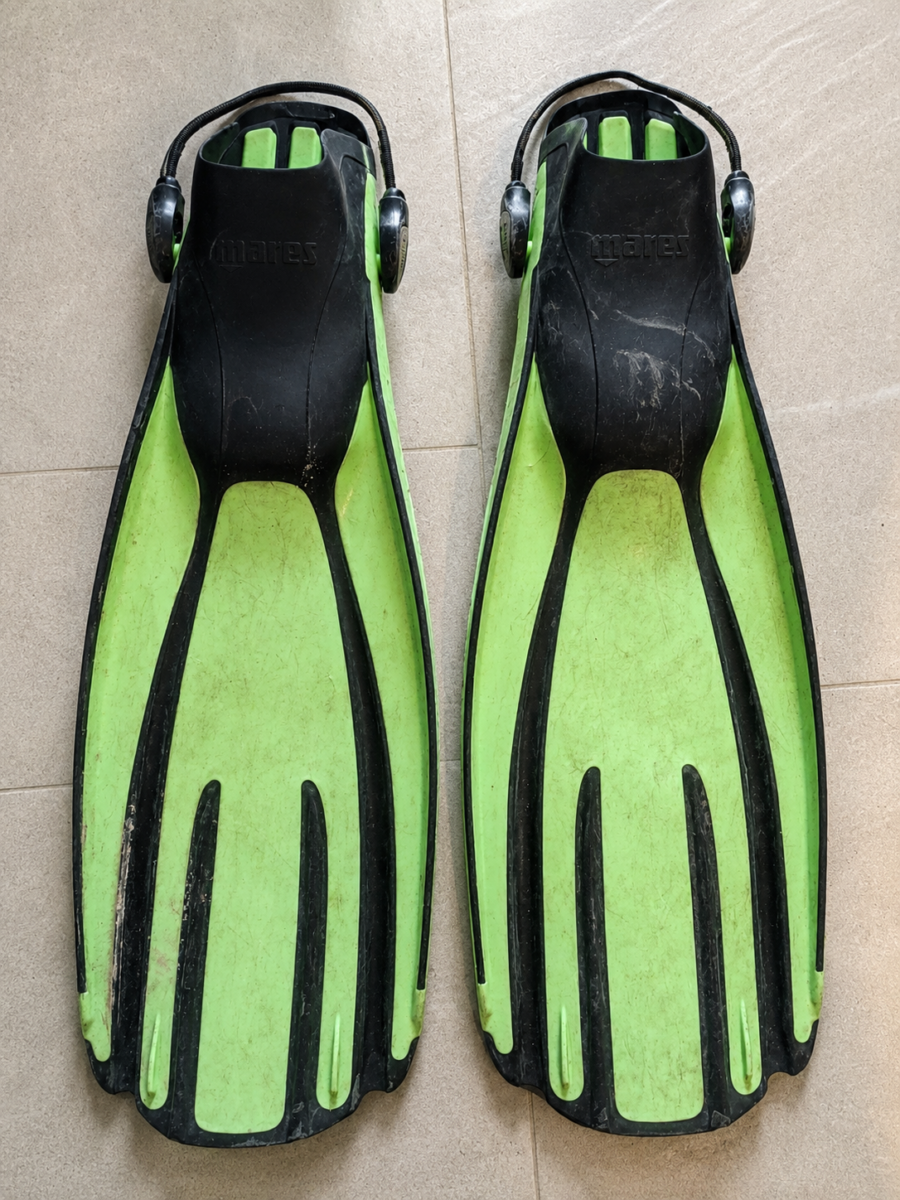
That is why some of the fins in the photographs in this article don’t look particularly glamorous. They’re scratched, faded and battered.
That’s actually the point.
They’ve been used.
And they still work.
Affiliate Disclosure: As an Amazon Associate, I earn from qualifying purchases. Some links on this page are affiliate links, which means I may earn a commission if you make a purchase, at no additional cost to you.
Quick Comparison: The Best Types of Scuba Fins
| Fin Type | Best For | Frog Kick | Back Kick | Helicopter Turn | Cave/Technical Diving |
|---|---|---|---|---|---|
| Traditional paddle fin | Recreational to advanced diving | Very good | Good | Good | Good |
| Stiff technical paddle fin | Cave, sidemount and technical diving | Excellent | Excellent | Excellent | Excellent |
| Full-foot fin | Warm-water recreational diving | Depends on blade | Depends on blade | Depends on blade | Not my choice |
| Highly flexible/hinged fin | Recreational diving | Good | Limited | Limited | Not my choice |
| Split fin | Easy flutter kicking | Limited | Poor | Poor | Not recommended |
The important thing here is that there isn’t necessarily one “best scuba fin” for everybody.
For someone doing relaxed reef diving in the Caribbean, a lightweight recreational fin may be perfectly adequate.
For somebody learning cave diving, I want something completely different.
Open-Heel vs Full-Foot Scuba Fins
This is one of the first decisions to make.
Full-Foot Fins
Full-foot or closed-heel fins are worn directly on the foot, usually without a substantial diving boot.
They can be perfectly good for warm-water recreational diving, particularly from boats where you aren’t walking over rocks or rough terrain.
They’re lightweight, simple and often relatively inexpensive.
If you know you’re only ever going to do warm-water recreational diving, there’s nothing inherently wrong with them.
The problem is progression.
If you later start diving in colder water, technical diving or cave diving, you’re probably going to want proper diving boots.
Cenote and cave diving frequently involves walking across rocks, jungle paths, steps and uneven entrances while carrying equipment. Having a decent pair of boots makes an enormous difference.
Open-Heel Fins
For that reason, I generally recommend open-heel fins with diving boots.
They are more versatile and give you much more freedom to progress.
If you’re buying your first serious pair of fins and think you might eventually explore sidemount, technical diving, colder water or cave diving, I’d buy open-heel fins from the beginning.
You won’t then need to replace perfectly good fins simply because your diving has progressed.
Mares Avanti Quattro: My All-Round Recommendation
The Mares Avanti Quattro is probably my favourite all-round recreational fin.
I’ve used Quattros for an enormous number of dives and still use them regularly.
They’re powerful without being excessively stiff and work well for several different propulsion techniques.
For a recreational diver who wants a fin capable of progressing into more advanced diving, they’re an excellent compromise.
They are also considerably more suitable for the techniques we teach than extremely flexible recreational fins.
And I have some fairly convincing evidence for their durability.
These Quattros Have Done More Than 1,000 Dives
The green Mares Quattros pictured in this article are mine.
They’ve done well over 1,000 dives.
They aren’t shiny.
They’re scratched, marked and thoroughly used.
From a marketing perspective, that’s probably exactly the photograph you’re not supposed to show. Manufacturers understandably photograph pristine equipment because new equipment looks attractive.
But from a working diver’s perspective, I’m interested in something else.
I want to know what the equipment looks like and how it performs after years of use.
Everything works during its first week.
The real test is whether something continues working after hundreds or thousands of dives.
My Quattros have.
That carries considerably more weight with me than how attractive a fin looks when you first remove it from the box.
The Weak Point of the Mares Quattro: The Heel Strap
There is one part of the Mares design I don’t particularly like.
The original heel strap.
The standard Mares strap uses a rubber/elastomer system which works perfectly well—until it doesn’t.
I’ve had one fail.
The problem is that failure can be sudden.
One moment you’ve got a working fin strap and the next moment you haven’t.
That’s particularly inconvenient when you’re standing beside a cenote preparing for a dive.
For recreational diving it’s annoying.
For technical or cave diving, I prefer equipment where potential failure points are as simple and repairable as possible.
My Bungee Modification
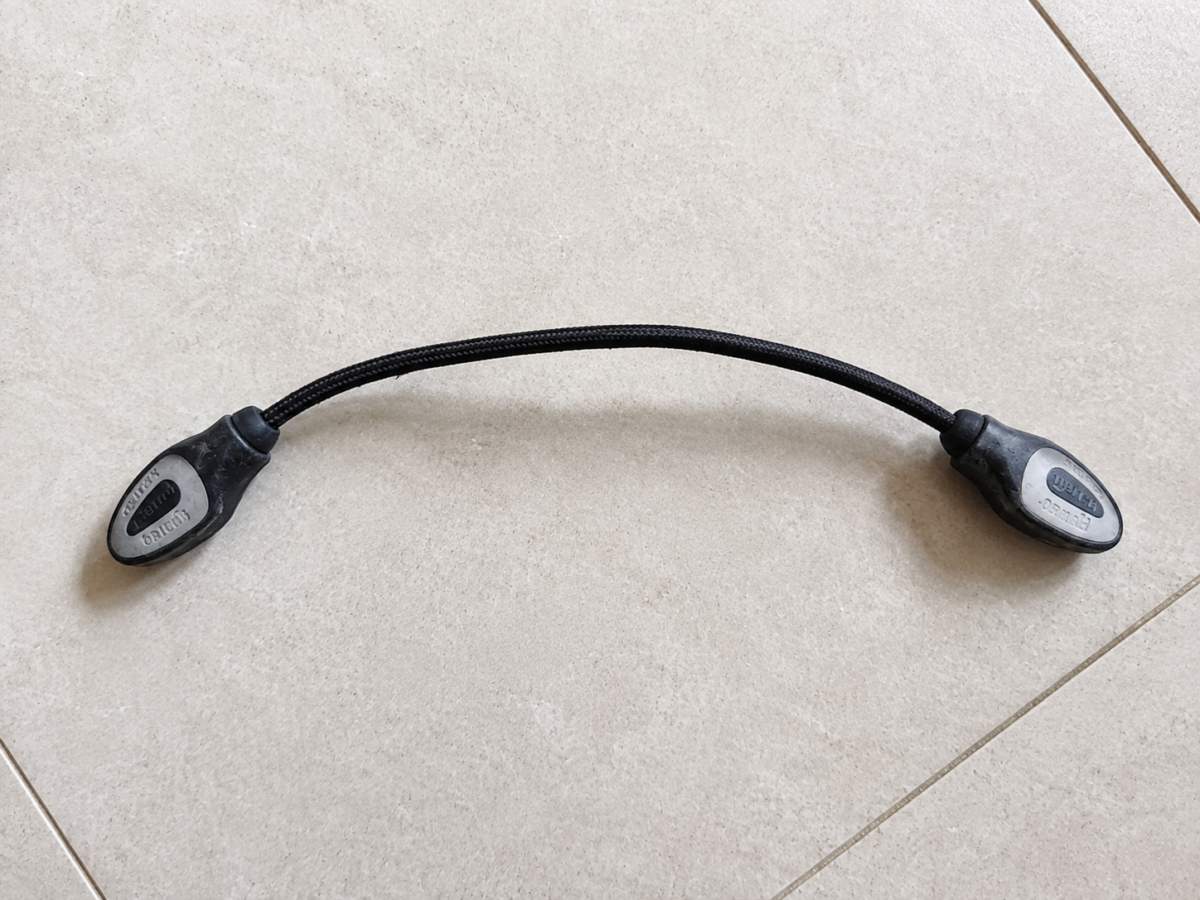
After one of my original Mares straps failed, I took the mechanism apart and replaced the strap with bungee cord.
It’s an extremely simple modification.
And that’s precisely why I like it.
A bungee doesn’t normally go from apparently perfect to completely useless instantaneously. It gradually begins showing signs of wear.
I can inspect it.
I can see deterioration developing.
And if I don’t like the look of it, I replace it.
Even better, if it does become damaged at a dive site, I can replace it with another piece of bungee.
No proprietary mechanism is required.
For cave diving in particular, I’m a great believer in simple equipment that can be inspected, understood and repaired.
Bungee vs Standard Fin Straps
| Strap Type | Advantages | Disadvantages |
|---|---|---|
| Standard rubber/elastomer | Convenient, lightweight | Can eventually fail; replacement may require specific parts |
| Bungee | Simple, cheap, visible wear, field repairable | Requires modification/setup |
| Stainless spring | Extremely robust, easy to use | Heavier and less field-adjustable |
For my Quattros, I prefer the simplicity of bungee.
Spring Heel Straps
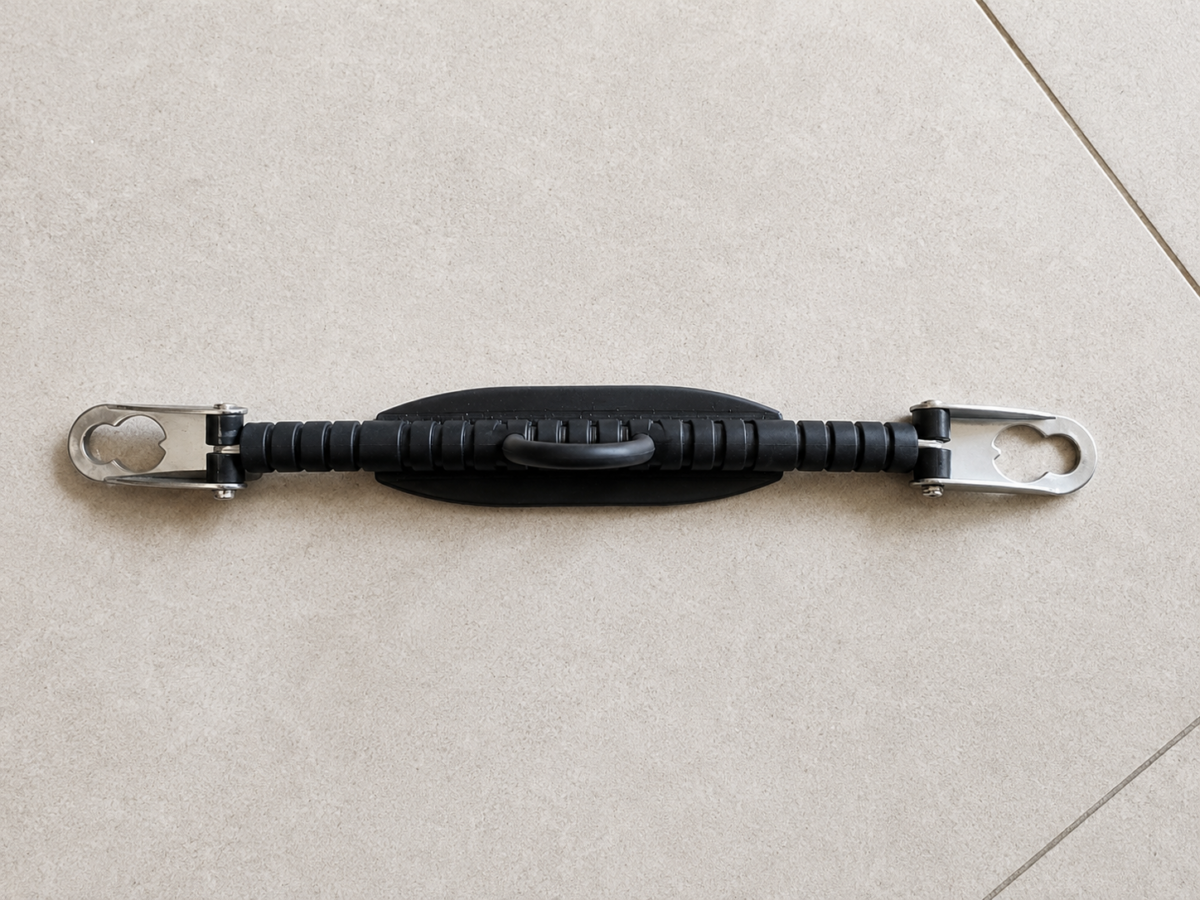
Another excellent option is a spring heel strap.
The replacement strap shown in this article contains a metal spring inside the protective outer covering.
This produces a considerably more substantial system than a conventional rubber strap.
Spring straps are extremely popular with technical and cave divers for good reason.
They’re robust, easy to pull over a boot and don’t rely on the traditional adjustable plastic buckle arrangement.
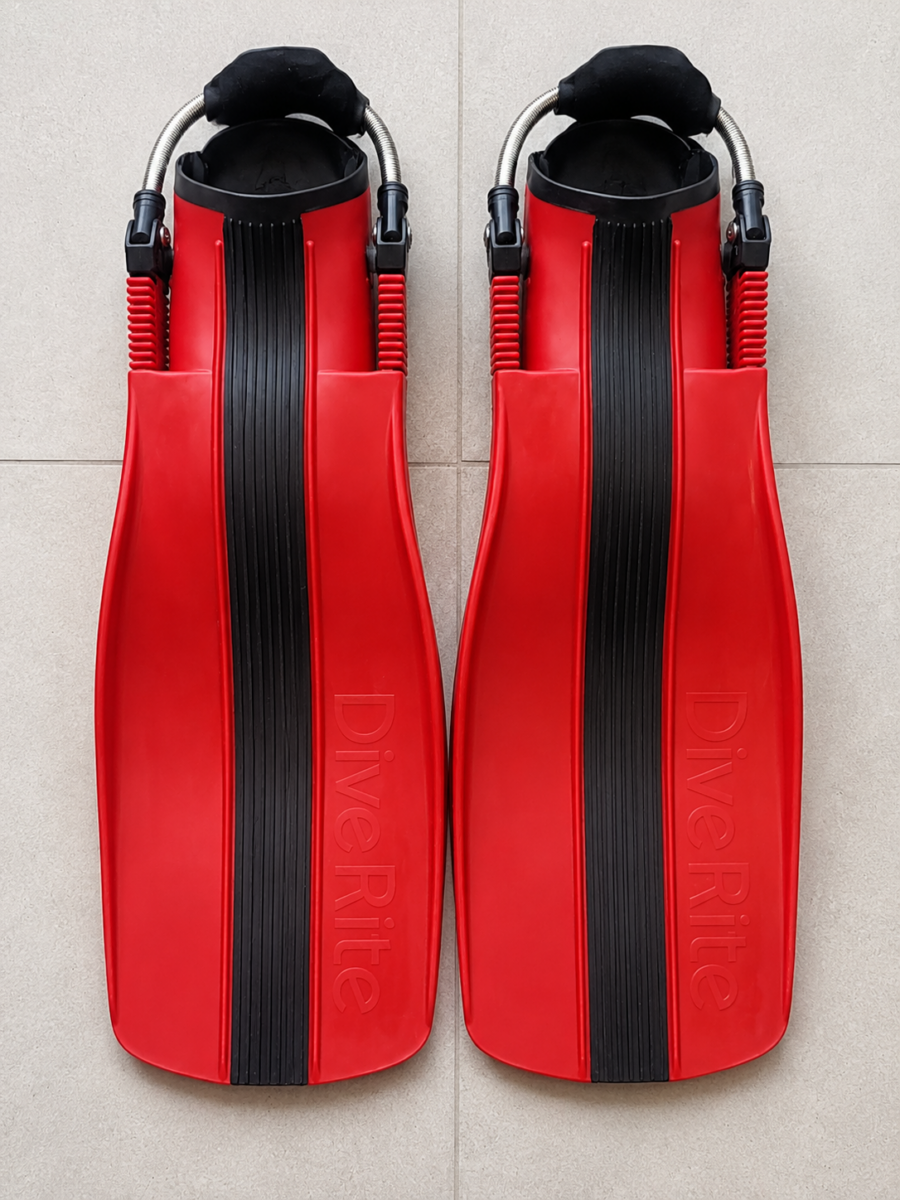
The Dive Rite fins I use already have a very substantial spring system, which is one of the things I like about them.
Dive Rite Fins: My Choice for Serious Cave Diving
When I’m doing more demanding cave diving, particularly stage cave diving or scooter/DPV diving, I generally use my Dive Rite fins.
These are much more like the traditional technical diving fin.
They’re shorter, stiffer and substantially heavier than something like the Mares Quattro.
That isn’t necessarily desirable for every diver.
But underwater, particularly in cave diving, it has advantages.
A stiff paddle fin transfers movement effectively and gives excellent control when using technical propulsion techniques.
They’re particularly effective for:
- Frog kicking
- Modified frog kicks
- Back kicking
- Helicopter turns
- Precise positioning
- Cave diving
- Sidemount diving
- Stage diving
- DPV/scooter diving
They’re not necessarily the fins I’d give every newly certified recreational diver.
But for the type of diving I do, they’re extremely effective.
OMS Slipstream and Similar Technical Fins
The OMS Slipstream follows the same basic philosophy.
It’s a relatively short, stiff paddle-style fin designed around control rather than simply generating lots of movement through flutter kicking.
There are several fins following this general design.
You’ll also see similar technical fins from Scubapro and other manufacturers.
For cave and technical diving, this general shape works extremely well because the blade responds predictably to different propulsion techniques.
That predictability matters when you’re teaching.
Why Propulsion Technique Changes Which Fin I Recommend
This is probably the most important distinction between recreational and cave diving fins.
A recreational diver may spend almost the entire dive flutter kicking.
That’s the familiar alternating up-and-down movement most divers learn naturally.
In a cave, we frequently don’t want to do that.
A downward kick close to the bottom can disturb sediment.
In some environments that can dramatically reduce visibility.
Instead, cave divers use several propulsion techniques that allow us to move while controlling where the water is being pushed.
These include the frog kick, modified frog kick, back kick and helicopter turn.
A good technical fin needs to work with all of them.
Why the Back Kick Matters
The back kick is particularly revealing.
It allows a diver to move backwards without using their hands or pushing against the environment.
That means I can approach something, realise I’m too close and simply reverse away from it while remaining horizontal and in trim.
The movement requires the fin to “catch” the water during a particular part of the kick.
Stiffer paddle-style fins tend to provide good feedback and resistance.
Some very flexible fins don’t.
You can sometimes make them work, but you’re making the technique harder to learn.
And when I’m teaching someone, that’s the opposite of what I want.
Why I Don’t Recommend Split Fins for Cave or Technical Training
Split fins can be very comfortable.
They require relatively little effort when flutter kicking, which can make them attractive to divers with knee problems or divers who simply prefer an easy recreational kicking style.
For the right person doing the right type of diving, they can work perfectly well.
But I don’t recommend them for cave or technical training.
The issue isn’t that you literally cannot frog kick or back kick with split fins.
You can.
Experienced divers can make all sorts of equipment work.
The problem is that the fin behaves differently.
Split fins are fundamentally optimised around a different style of propulsion, particularly flutter kicking.
They don’t provide the same resistance and feedback during a back kick or helicopter turn as a traditional paddle fin.
When I’m trying to teach somebody propulsion techniques, I want their equipment to respond predictably.
Ideally, I also want their fins to behave similarly to mine.
I’m trying to teach the technique, not teach them how to compensate for their equipment.
That’s why I wouldn’t choose split fins for someone planning to progress into cave diving.
What About Scubapro Seawing-Style Fins?
I have similar reservations about extremely flexible or hinged recreational fins such as the Scubapro Seawing style.
They’re popular recreational fins and many divers love them.
That’s fine.
But recreational performance and technical-diving performance aren’t necessarily the same thing.
For straightforward flutter kicking through open water, flexible fins can feel extremely comfortable and efficient.
Once we start practising controlled frog kicks, back kicks and helicopter turns, however, I prefer a more conventional blade.
Again, I’m not saying nobody can cave dive using them.
Some people do.
I’m saying they wouldn’t be my recommendation for somebody learning these techniques.
There’s an important difference.
Mares Quattro vs Dive Rite: Which Do I Actually Use?
I own and use both.
For general diving, guiding and recreational cenote diving, I really like the Mares Avanti Quattro.
They’re comfortable, powerful and versatile.
For serious cave diving, particularly when I’m carrying stages or using a scooter, I generally move to my Dive Rite fins.
They’re heavier and stiffer, but that suits what I’m doing.
So rather than declaring one fin universally better than another, I’d describe them as tools for slightly different jobs.
My Fin Choices
| Diving Type | What I’d Choose |
|---|---|
| Warm-water holiday diving | Full-foot or open-heel recreational fin |
| Recreational diving with future progression | Mares Avanti Quattro or similar paddle/channel fin |
| Cenote diving | Mares Avanti Quattro |
| Sidemount training | Quattro or technical paddle fin |
| Introductory cave training | Paddle-style fin |
| Full cave diving | Technical paddle fin |
| Stage cave diving | Dive Rite/OMS-style technical fin |
| DPV/scooter cave diving | Dive Rite/OMS-style technical fin |
| Technical diving | Stiff paddle-style fin |
| Split fins | Not my recommendation for technical/cave training |
| Very flexible/hinged fins | Fine recreationally, not my preference for cave training |
Don’t Buy Fins Only for the Diving You’re Doing Today
This is probably my biggest piece of advice for newer divers.
Think about where your diving might go.
If you’re absolutely certain you’re going to spend your diving life doing warm-water reef dives from boats, lightweight full-foot fins might be all you’ll ever need.
But if you’re already thinking:
“I’d like to try sidemount one day.”
Or:
“I’d love to learn cave diving.”
Then I’d buy accordingly.
A good pair of open-heel paddle fins and boots can take you from your first recreational dives through advanced diving and potentially into technical or cave diving.
Buying the right equipment once is usually cheaper than repeatedly replacing equipment as your diving develops.
Durability Matters More Than Marketing
Divers spend a lot of time comparing specifications.
Weight.
Blade materials.
Channels.
Vents.
Hydrodynamics.
All of that can be useful.
But after years of diving professionally, I’ve developed another test:
How easy is it to break, and what happens when it eventually does?
Because eventually, everything breaks.
That’s why I like simple equipment.
It’s why I replaced my Mares strap with bungee.
It’s why heavy-duty spring straps appeal to technical divers.
And it’s why a battered pair of fins that has survived 1,000 dives tells me something that a photograph of a pristine pair straight out of the box never can.
Best Scuba Fins: My Recommendations
If I were advising someone buying fins today, I’d divide the recommendations into two broad groups.
Best All-Round Scuba Fin: Mares Avanti Quattro
For a diver wanting one versatile fin capable of recreational diving while leaving the door open for more advanced training, the Mares Avanti Quattro remains one of my favourites.
My own pair has proved remarkably durable.
My main criticism is the original heel-strap arrangement, which I’ve personally replaced with a simpler bungee system.
Best for Cave and Technical Diving: Dive Rite / OMS-Style Paddle Fins
For dedicated cave, sidemount or technical diving, I’d move towards a shorter, stiffer paddle fin.
My own Dive Rite fins are what I use when I’m doing more serious cave dives, particularly with stages or a scooter.
OMS Slipstreams and similar technical designs follow the same general philosophy.
They’re not about looking elegant.
They’re about control.
And in cave diving, control matters considerably more.
Affiliate note: Some of the links below are Amazon affiliate links. I may earn a commission from qualifying purchases at no additional cost to you.
Frequently Asked Questions
What are the best fins for scuba diving?
There isn’t one best fin for every diver. For general recreational diving and progression towards more advanced diving, I like the Mares Avanti Quattro. For dedicated cave and technical diving, I prefer shorter, stiffer paddle fins such as Dive Rite or OMS-style fins.
Are open-heel or full-foot fins better?
Full-foot fins are perfectly suitable for warm-water recreational diving. Open-heel fins worn with diving boots are more versatile and are my recommendation if you expect to progress into cold-water, sidemount, technical or cave diving.
Are split fins good for scuba diving?
Split fins can work well for relaxed recreational flutter kicking and may suit divers who want to reduce strain on their knees. I don’t recommend them for cave or technical training because they behave differently during techniques such as back kicks, frog kicks and helicopter turns.
Can you cave dive with Mares Avanti Quattro fins?
Yes. I’ve used Mares Quattros extensively and they work well for frog kicks, back kicks and other controlled propulsion techniques. For more demanding cave diving involving stages or scooters, I personally prefer a shorter, stiffer technical fin.
Are spring straps better than rubber fin straps?
For technical diving, I generally prefer spring or bungee systems because they’re robust and simple. My Mares Quattros have been modified with bungee after an original strap failed, while my Dive Rite fins use substantial spring straps.
How long should scuba fins last?
Good fins can last for many years and potentially thousands of dives. My own Mares Quattros have completed well over 1,000 dives. Blade durability is only part of the equation, though: heel straps, buckles and attachment points should also be inspected regularly.
Final Thoughts: Buy Fins That Will Still Work in 1,000 Dives
The best scuba fins aren’t necessarily the newest, most complicated or most expensive.
They’re the ones that work for your diving.
For recreational divers, comfort and efficiency may be the priorities.
For cave and technical divers, I place much more emphasis on precise propulsion, durability, simplicity and the ability to repair equipment in the field.
That’s why I still use equipment that looks thoroughly used.
Those scratches aren’t a disadvantage.
They’re evidence.
My old Mares Quattros have done more than a thousand dives and continue to work extremely well. My Dive Rite fins come out when I’m doing more demanding cave diving, carrying stages or using a scooter.
Ultimately, I’d rather recommend a battered piece of equipment that I’ve watched survive a thousand dives than a shiny new product I’ve only used for a week.
Everything works when it’s new. The real test is whether it still works after years underwater.