What is Cave Diving in Tulum?
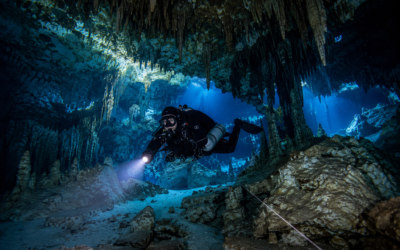
Cave diving is an advanced form of scuba diving where divers explore underwater caves, moving beyond the direct vertical access to the surface found in open-water diving. Unlike recreational diving, where ascending is always an option, cave divers must navigate through intricate tunnels, stalactite-filled chambers, and submerged passageways with specialized equipment and training.
If you’re thinking about cave diving in Mexico, you’re in the best location in the world. With the largest underwater cave systems on Earth, the cenotes of the Yucatán Peninsula offer an unparalleled adventure for certified cave divers.
Table of Contents
Cavern Diving vs. Cave Diving – What’s the Difference?
If you’re new to cenote diving, you might be wondering: What’s the difference between cavern diving and cave diving?
Cavern Diving (For Recreational Divers)
Cavern diving allows recreationally trained divers to explore the light zone of a cave. These dives stay within 60 meters (200 feet) of the entrance, maintaining a clear exit to open water.
Key Cavern Diving Rules:
✔ Always see daylight – You must remain in the “light zone.”
✔ Max penetration: 60m – Some training agencies have more conservative limits.
✔ Guideline required – A permanent guide rope must always be in reach.
✔ Rule of Thirds – One-third of your gas in, one-third out, one-third as backup.
✔ No restrictions – Passages must allow two divers to swim side by side.
If you’re not yet cave-certified, but you want to experience the incredible cenote environment, check out our Cenote Cavern Diving Tours.
Cave Diving Tulum (For Certified Cave Divers Only)

Cave diving takes you beyond the light zone and past the 60m penetration limit. This is a highly technical form of diving that requires specialized training, redundant equipment, and meticulous planning.
Cave Diving Rules (TGDL Method)
We follow the “The Good Divers Always Live” acronym to ensure safety:
✔ T – Training – Proper cave diving certification is essential.
✔ G – Guide Line – A continuous line from the exit to your current position.
✔ D – Depth Limits – Deep cave diving requires extra training.
✔ A – Air Management – Following the Rule of Thirds is critical.
✔ L – Lights – Each diver must carry a primary and two backup lights.
Want to take the next step? Book your Cave Diving Training with us and become a fully certified cave diver.
Why is Mexico the Best Place for Cave Diving?
The Riviera Maya is home to the largest and most beautiful underwater cave systems in the world. Nine of the ten longest underwater caves are located around Tulum and Playa del Carmen, making this area a true paradise for cave divers.
🔹 Sac Actun System (Largest underwater cave in the world)
🔹 Ox Bel Ha System (Second largest)
🔹 Dos Ojos & The Pit – Famous for crystal-clear visibility
🔹 Mayan Blue & Jailhouse Cenote – Stunning stalactite formations
🔹 Calavera (Temple of Doom) – Iconic for halocline effects
These caves are constantly being explored, with new connections discovered every year. The Grand Mayan Aquifer Project aims to map and connect the entire underground system—a fascinating process that makes cave diving in Mexico even more exciting.
Technical Diving vs. Recreational Diving

What is Technical Diving?
Technical diving goes beyond recreational limits, allowing divers to explore deeper, stay longer, and penetrate further. This includes:
✔ Decompression Diving – Required for longer cave dives.
✔ Diving Deeper than 40m (130ft) – Requires extra gas planning.
✔ Overhead Environments – Cave and wreck diving fall under this category.
✔ Passing Restrictions – Where divers must remove gear to fit through small openings.
If you’re already an experienced cave diver looking to take your training even further, we offer Advanced Technical Cave Diving Courses in Sidemount, DPV (Scooters), and CCR Rebreathers.
👉 Learn More About Technical Diving
Essential Cave Diving Equipment
Cave divers use specialized gear to ensure safety and redundancy. Here’s what you need:
🔹 Guideline – Your lifeline in case of low visibility.
🔹 Sidemount or Backmount Configuration – Sidemount is preferred in Mexico for its flexibility in tight passages.
🔹 Primary Light + Two Backup Lights – 1500+ lumens recommended.
🔹 Cutting Devices – Essential in case of entanglement.
🔹 Directional Markers (Cookies & Arrows) – Used for navigation.
🔹 High-Performance Regulators – Designed for long-duration cave dives.
Best Cenotes for Cave Diving in Tulum
Here’s a list of the top cenotes for cave diving in Mexico:
| Cenote | Cave System |
|---|---|
| Car Wash | Car Wash |
| Mayan Blue | Ox Bel Ha |
| Gran Cenote | Sac Actun |
| Nahoch | Sac Actun |
| Tak Be Ha | Sac Actun (Formerly Dos Ojos) |
| Dos Palmas | Sac Actun (Formerly Dos Ojos) |
| Calavera | Sac Actun |
| Dos Pisos | Dos Pisos |
| Caterpillar | Caterpillar |
| Jailhouse | Ox Bel Ha |
On these Cave Diving Tours, you’ll see beautiful stalactites & stalagmites, experience haloclines, and explore the fascinating Mayan history behind the cenotes.
👉 Book Your Cave Diving Adventure
Cave Diving in Tulum Certification & Training

We offer professional cave diving in Tulum training with top certification agencies, including:
✔ TDI (Technical Diving International)
✔ IANTD (International Association of Nitrox and Technical Divers)
✔ GUE (Global Underwater Explorers)
✔ NSS-CDS (National Speleological Society – Cave Diving Section)
✔ NACD (National Association for Cave Diving)
Note: PADI only offers a Cavern Diver course, not a full Cave Diver course.
📍 Want to Get Certified? Enroll in Cave Diving Training
Ready to Experience the Best Cave Diving in Tulum, Mexico?
The cenotes of Tulum offer some of the most spectacular cave diving anywhere in the world. Whether you’re looking for your first cavern diving experience, guided cave dives, or full cave diving certification, we can help you explore these incredible underwater systems safely and confidently.
✔ Guided Cave Diving
✔ Cavern Diving Tours
✔ Cave Diving Courses
✔ Technical Diving Training
✔ Sidemount Instruction
Contact us today to discuss your experience level and build the perfect cave diving itinerary.
Book Your Cave Diving Adventure
Frequently Asked Questions
What is the difference between cavern diving and cave diving?
Cavern diving remains within the natural light zone of a cave and within direct access to the surface. Cave diving goes beyond the light zone and requires specialist training, equipment, and procedures.
Do I need cave certification to cave dive in Mexico?
Yes. Divers entering full cave environments should hold an appropriate cave diving certification from a recognised training agency. Recreational divers can experience cenote cavern diving with a qualified guide.
Is cave diving in Tulum safe?
When conducted within proper training limits and established safety procedures, cave diving can be a safe activity. Cave divers follow strict gas management, navigation, equipment, and emergency protocols.
What are the best cenotes for cave diving in Tulum?
Popular cave diving sites include Dos Ojos, The Pit, Nahoch Nah Chich, Jailhouse, Mayan Blue, Car Wash, and Dreamgate. Each offers unique geological features and levels of complexity.
How much does cave diving cost in Tulum?
Prices vary depending on the type of dive, equipment requirements, and whether training is involved. Guided cave dives and cave diving courses generally include tanks, weights, transportation, and entrance fees.
About the Author
Dominic Evans is a professional cave diving instructor based in Tulum, Mexico. With more than a decade of experience exploring and teaching within the cenotes of the Riviera Maya, he has guided hundreds of divers through some of the world’s most spectacular underwater cave systems.
Specialising in sidemount, cavern, cave, and technical diving training, Dominic combines extensive local knowledge with a relaxed and safety-focused teaching style. His passion is helping divers progress from their first cenote experience through to advanced cave diving certification.
Learn more about Dominic and his diving background on the About page.
Final Thoughts
Cave diving isn’t just an activity—it’s an adventure into Earth’s hidden depths. The cenotes of Mexico offer world-class conditions, stunning geological formations, and incredible biodiversity.
However, proper training, the right equipment, and a respect for the rules are essential. Cave diving isn’t forgiving, but when done right, it’s one of the most rewarding and breathtaking experiences imaginable.
