
Cenotes in Mexico are natural sinkholes formed when limestone caves collapse, exposing the vast underground river systems of the Yucatán Peninsula. Their formation was influenced by millions of years of limestone deposition, sea-level changes, groundwater erosion, and the Chicxulub asteroid impact that struck Mexico 66 million years ago.
Why Are There So Many Cenotes in Mexico?
Cenotes are natural sinkholes formed by the slow erosion of limestone rock. The Yucatán Peninsula is home to over 6,000 cenotes, making it the cenote capital of the world. But why are there so many here?
The Science Behind Cenote Formation
✔ The Yucatán Peninsula is made of porous limestone, which allows rainwater to seep through, slowly dissolving the rock over thousands of years.
✔ Over time, underground rivers carved vast cave systems beneath the surface.
✔ When cave roofs became too thin, they collapsed, creating cenotes—natural access points to the underground water system known as the Great Mayan Aquifer.
Cenotes Are Mexico’s Underground Water Veins
Cenotes in Mexico and their vast cave systems transport fresh water beneath the jungle, much like the veins of the Earth, filtering rainwater and nourishing the lush forests above. Without cenotes, there would be no freshwater in the Yucatán!
What Created Cenotes?
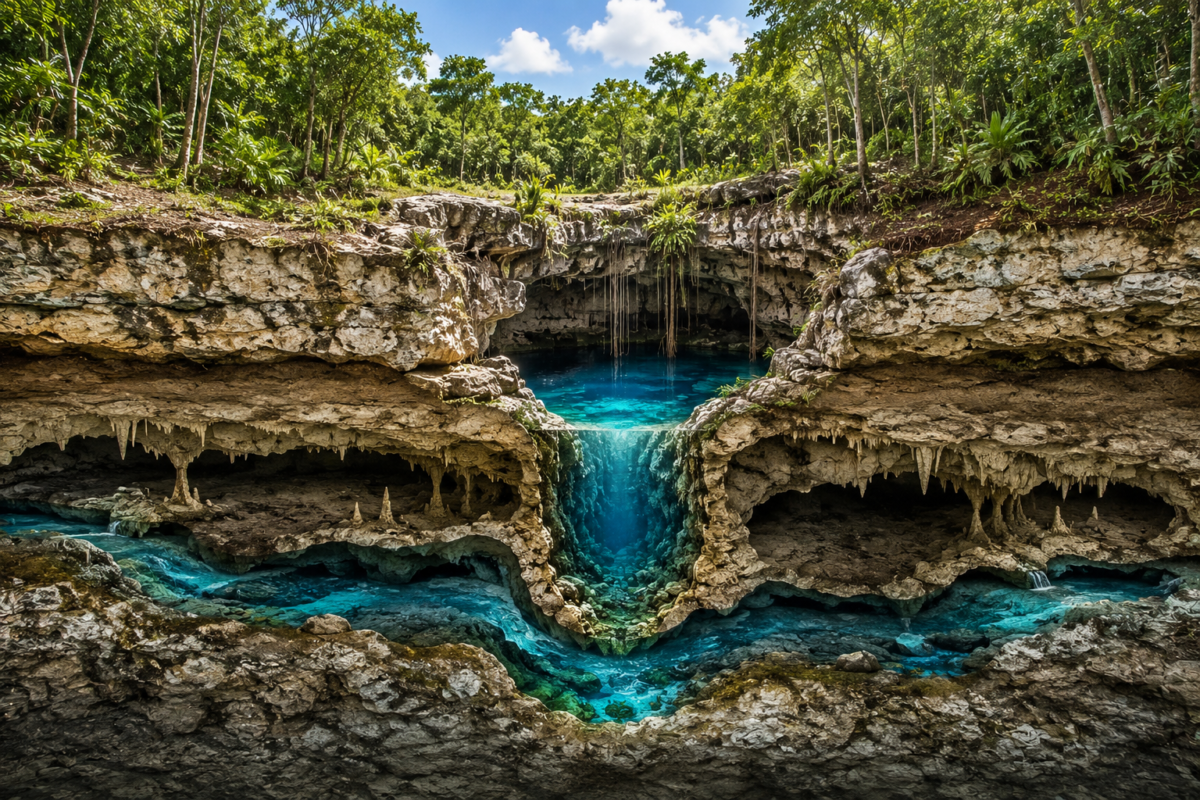
Cenotes are created when cave passageways become so large that the roof collapses. Most cenotes have a round opening, with a pile of fallen rocks in the middle and clear water surrounding it.
But this process didn’t happen overnight—it took millions of years of geological changes, rising and falling sea levels, and one major cosmic event…
☄️ The Meteor That Changed Everything
66 million years ago, a 10-kilometer-wide asteroid crashed into the Yucatán Peninsula, creating the Chicxulub Crater. This impact:
✔ Shattered the limestone bedrock, creating fractures that allowed water to flow underground.
✔ Triggered global climate change, wiping out the dinosaurs and leading to extreme ice ages.
✔ Helped shape the underground rivers, setting the foundation for the formation of cenotes in Mexico.
👉 The Yucatán’s cenotes are a direct result of the same impact that ended the dinosaurs!
How Were Cenotes Formed? A Step-by-Step Breakdown
1️⃣ Millions of Years Ago – Limestone Formation
- The Yucatán Peninsula was once a shallow sea, covered by coral reefs and marine life.
- Over time, dead coral, shells, and marine creatures compacted, forming a thick layer of limestone rock.
2️⃣ The Meteor Impact (66 Million Years Ago)
- The Chicxulub asteroid impact shattered the limestone, creating cracks and fissures in the Earth’s crust.
- These fractures allowed rainwater to seep deep underground, forming the Great Mayan Aquifer.
3️⃣ Ice Ages & Underground River Formation
- Over millions of years, acidic rainwater dissolved the limestone, creating massive underground caves and tunnels.
- During ice ages, when sea levels were low, these caves remained dry, allowing stalactites and stalagmites to form.
4️⃣ Cave Collapse & Cenote Creation
- As sea levels rose and fell, underground caves flooded and emptied multiple times.
- The cave ceilings weakened over time and eventually collapsed, creating cenotes.
- Water from the Great Mayan Aquifer filled the cenotes, making them oases of crystal-clear freshwater.
👉 Cenotes are essentially “windows” into the world’s largest underground river system!
What Are the Different Types of Cenotes in Mexico?
Cenotes in Mexico are classified based on their age and formation stage:
| Cenote Type | Formation Stage | Example |
|---|---|---|
| Open Cenote | Fully collapsed, like a natural swimming pool | Casa Cenote |
| Semi-Open Cenote | Partially collapsed, with both open-air and cave sections | Cenote Dos Ojos |
| Cave Cenote | Entirely enclosed, accessible through a cavern entrance | Cenote El Pit |
| Collapsed Cenote | A cenote that has eroded into a lagoon | Laguna Bacalar |
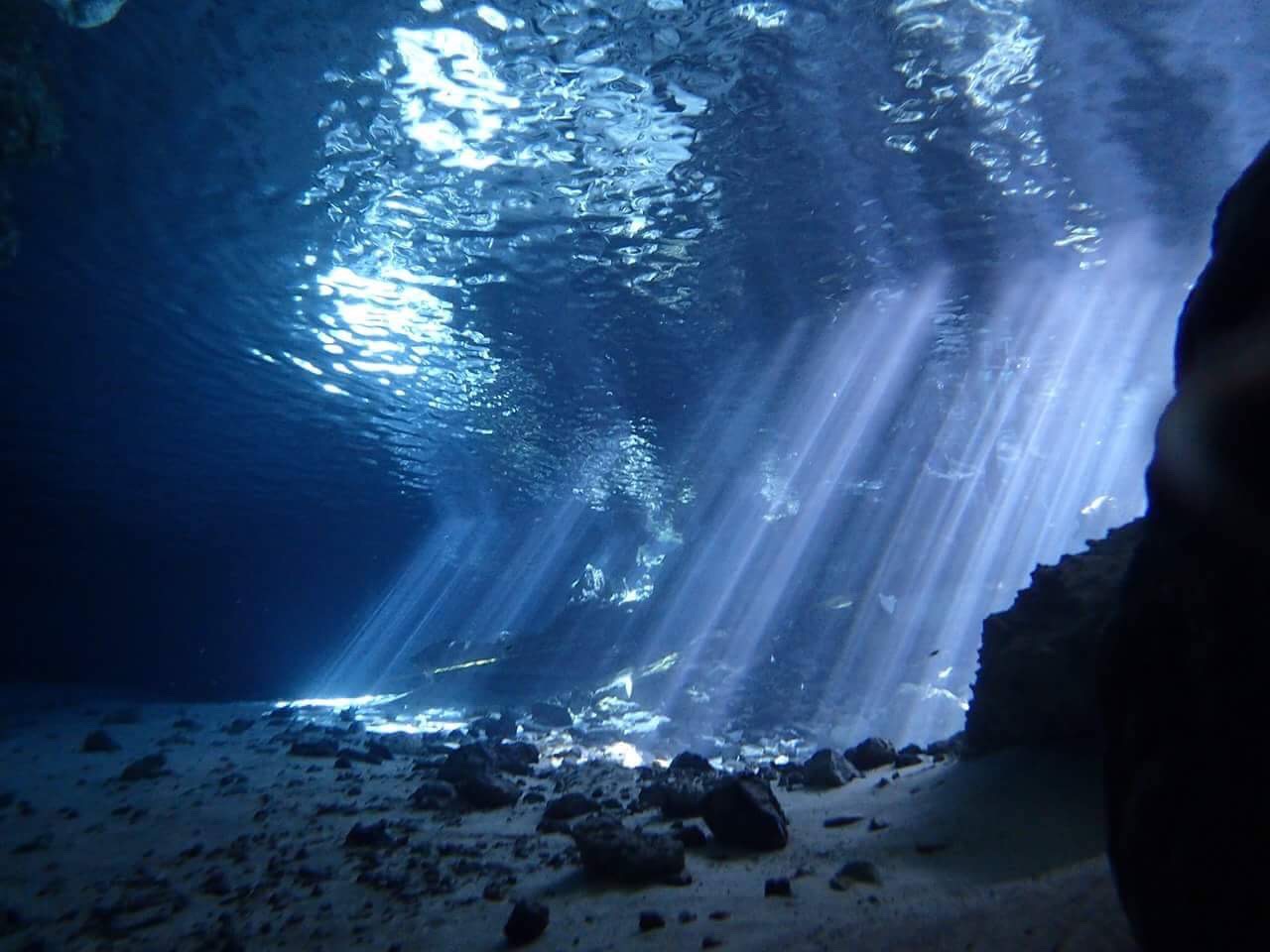
Each type of cenote offers a unique experience, from swimming and snorkeling to cave diving deep into the Earth’s hidden world.
What Does “Cenote” Mean?
The word cenote comes from the Maya term “Tzonot,” meaning “sacred well”. The ancient Maya saw cenotes as portals to Xibalba—the underworld.
In English, a cenote is also called a “sinkhole,” but the term doesn’t fully capture their beauty and cultural importance.
Why Were Cenotes in Mexico Important to the Maya?
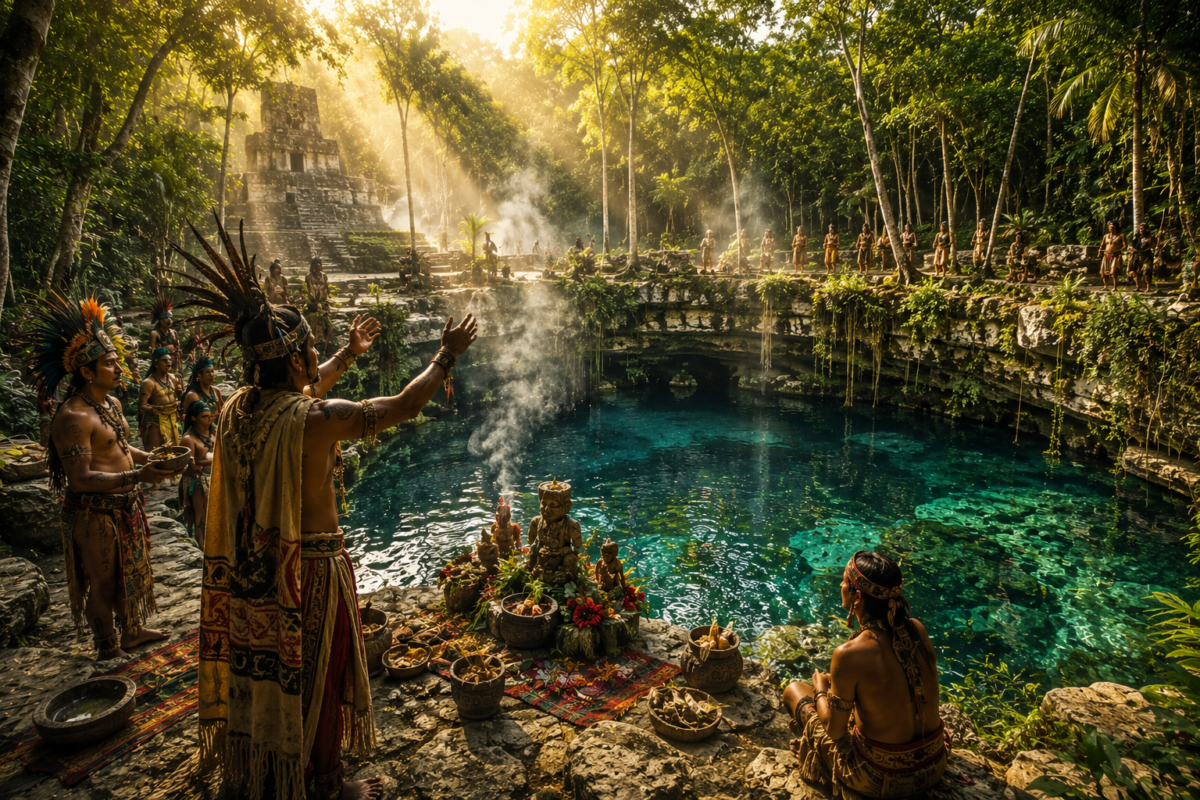
For the Maya civilization, cenotes were the source of life and the entrance to the afterlife.
✔ Freshwater Supply: With no rivers in the Yucatán, cenotes provided the only drinking water.
✔ Sacred Ritual Sites: The Maya made offerings to Chaac, the rain god, in cenotes.
✔ Human Sacrifices: Archaeological evidence suggests some cenotes were used for ceremonial sacrifices.
✔ Burial Grounds: Some cenotes contained Maya artifacts, pottery, and human remains.
👉 The famous Sacred Cenote at Chichén Itzá is one of the best examples of a cenote used in Maya rituals.
What Can You See Inside a Cenote?
Cenotes are time capsules preserving ancient fossils and formations:
✔ Fossils of prehistoric marine life – Proof that the Yucatán was once under the sea.
✔ Stalactites & Stalagmites – These formations only grow in dry caves, proving sea levels were lower in the past.
✔ Haloclines – A visible mix of freshwater and saltwater found in deep cenotes like El Pit.
✔ Blind Cave Fish & Unique Aquatic Life – Some cenotes have fish that evolved to live without eyesight!
Best Cenotes in Mexico for Diving & Snorkeling
| Cenote | Location | Type | Best For |
|---|---|---|---|
| Gran Cenote | Tulum | Semi-Open Cenote | Snorkeling |
| Dos Ojos | Tulum | Semi-Open Cenote | Cavern Diving & Snorkeling |
| El Pit | Tulum | Cave Cenote | Deep Diving |
| Cenote Angelita | Tulum | Open Cenote | Underwater Hydrogen Sulfide Cloud |
| Cenote Azul | Playa del Carmen | Open Cenote | Open Cenote Swimming |
| Cenote Ik Kil | Chichen Itza | Open Cenote | Touristic Open Cenote |
| Cenote Calavera | Tulum | Open Cenote | The “Temple of Doom” Cave Diving |
| Cenote Car Wash | Tulum | Open Cenote | Cavern Diving & Photography |
Each cenote offers something unique—whether it’s swimming in open cenotes, snorkeling with fish, or diving into deep caverns.
The Ring of Cenotes – A Geological Wonder Unique to Mexico
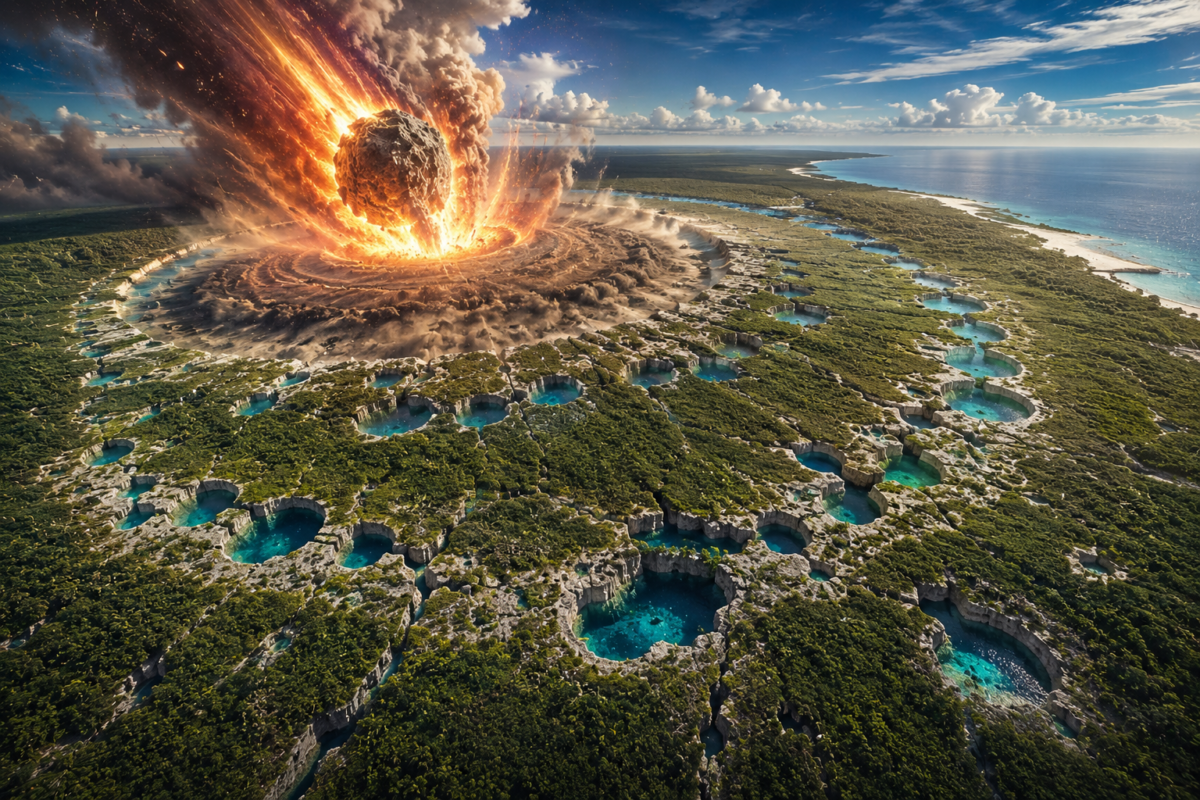
One of the most fascinating features of the Yucatán Peninsula is the Ring of Cenotes, a circular zone containing hundreds of cenotes that stretches across northern Yucatán.
Scientists believe this ring marks the edge of the ancient Chicxulub impact crater, created when a massive asteroid struck the Earth approximately 66 million years ago. The impact fractured the limestone bedrock, creating zones of weakness that allowed groundwater to carve out extensive underground cave systems.
Over millions of years, sections of these caves collapsed, forming the cenotes we see today. When mapped from above, many of these cenotes form a remarkable circular pattern that mirrors the outline of the buried crater.
The Chicxulub impact is famous for contributing to the extinction of the dinosaurs, but its effects can still be seen today beneath the jungles of Mexico.
Many geologists consider the Ring of Cenotes to be one of the clearest visible reminders of the asteroid impact that changed life on Earth forever.
Today, visitors can explore cenotes located along this ancient impact ring, swimming and diving through landscapes shaped by one of the most important geological events in Earth’s history.
Why Are There Seashells and Marine Fossils Inside Cenotes in Mexico?
One of the biggest surprises for visitors is discovering seashells, marine fossils, and ancient coral formations deep inside cenotes.
The reason is simple: the Yucatán Peninsula was once completely underwater.
Millions of years ago, the region was covered by a shallow tropical sea filled with coral reefs, shellfish, and marine life. As these organisms died, their shells and skeletons accumulated on the seabed, eventually forming the thick limestone rock that makes up the peninsula today.
When underground cave systems later developed within this limestone, they preserved evidence of this ancient marine environment.
Divers exploring cenotes often encounter:
- Fossilized coral formations
- Ancient seashells embedded in cave walls
- Marine limestone deposits
- Stalactites and stalagmites formed during past ice ages
These discoveries provide remarkable evidence that the Yucatán’s jungle landscape was once part of an ancient ocean.
For cave divers, cenotes offer a unique opportunity to swim through a natural museum where millions of years of geological history remain preserved beneath the surface.
The Sacred Cenotes of the Maya
For the ancient Maya, cenotes in Mexico were far more than sources of freshwater—they were sacred places connected to the spiritual world.
The Maya believed certain cenotes served as gateways to Xibalba, the underworld described in Maya mythology. These natural wells were considered places where humans could communicate with the gods and ancestral spirits.
Because rivers are virtually absent across much of the Yucatán Peninsula, cenotes became essential for survival. Entire Maya cities were established near reliable water sources, and many important ceremonies took place at sacred cenotes.
Archaeologists have discovered evidence of offerings within numerous cenotes, including:
- Gold and jade jewellery
- Pottery and ceremonial objects
- Incense burners
- Human remains
- Animal sacrifices
The most famous example is the Sacred Cenote at Chichén Itzá, where divers and archaeologists recovered thousands of artefacts from the water. These discoveries have provided valuable insights into Maya religion, trade networks, and daily life.
The Maya worshipped Chaac, the god of rain and water, and many offerings were made in the hope of securing rainfall and successful harvests.
Today, cenotes remain an important part of Mexico’s cultural heritage, offering visitors a unique connection to both the natural and spiritual history of the ancient Maya civilisation.
Quick Facts About Maya Sacred Cenotes
| Fact | Details |
|---|---|
| Maya Name | Ts’ono’ot (Sacred Well) |
| Spiritual Role | Portal to Xibalba (the Underworld) |
| Main Water Source | Freshwater for Maya cities |
| Important Deity | Chaac, the Rain God |
| Famous Example | Sacred Cenote, Chichén Itzá |
| Archaeological Finds | Jade, gold, pottery, human remains |
The sacred significance of cenotes helps explain why these natural formations continue to fascinate visitors from around the world. They are not only geological wonders but also some of the most important archaeological and cultural sites in Mexico.
FAQs About Cenotes
What is a cenote?
A cenote is a natural sinkhole formed when limestone bedrock collapses, exposing groundwater beneath the surface. Cenotes provide access to the vast underground river systems of the Yucatán Peninsula and are unique to regions with limestone geology.
Why are there so many cenotes in Mexico?
The Yucatán Peninsula is made almost entirely of porous limestone. Over millions of years, rainwater dissolved the rock, creating extensive cave systems. When sections of these caves collapsed, thousands of cenotes were formed. Today, more than 6,000 cenotes are known to exist across the region.
Are all cenotes connected underground?
Many cenotes are connected through the Great Maya Aquifer, one of the largest flooded cave systems in the world. Divers continue to discover new connections between cenotes, revealing hundreds of kilometers of underwater passages.
How deep are cenotes?
Cenote depths vary greatly. Some shallow open cenotes are only a few meters deep, while others, such as El Pit, exceed 120 meters in depth. This variety makes cenotes suitable for swimming, snorkeling, scuba diving, and technical cave diving.
Why is cenote water so clear?
The limestone surrounding cenotes acts as a natural filtration system. Because there is very little surface runoff or sediment entering the water, visibility often exceeds 100 meters, making cenotes some of the clearest freshwater environments on Earth.
What is a halocline?
A halocline is a visible layer where freshwater and saltwater meet. In deeper cenotes, divers can see a shimmering effect as they pass through this boundary. Haloclines are one of the most fascinating natural phenomena found in the Yucatán’s underwater caves.
Can anyone swim in a cenote?
Yes. Many open cenotes are suitable for swimming and snorkeling, even for visitors with no diving experience. Some cenotes provide life jackets, changing facilities, and easy access platforms.
Can beginners dive in cenotes?
Certified Open Water divers can enjoy guided cavern dives in suitable cenotes such as Dos Ojos. More advanced cave systems require specialized training and cave diving certification.
Are cenotes safe?
Cenotes are generally very safe when visitors follow local rules and environmental guidelines. Divers should always use qualified guides, remain within their certification limits, and respect conservation measures designed to protect these fragile ecosystems.
What animals live in cenotes?
Cenotes are home to a variety of wildlife, including freshwater fish, turtles, crustaceans, and unique blind cave fish that have adapted to life in complete darkness. Some cenotes also support rare aquatic species found nowhere else in the world.
Are cenotes freshwater or saltwater?
Most cenotes contain freshwater near the surface. However, many deeper cenotes connect to the sea and contain layers of both freshwater and saltwater, separated by a halocline.
What is the deepest cenote in Mexico?
Several cenotes exceed 100 meters in depth, with El Pit near Tulum being one of the most famous deep cenotes visited by technical divers. Its dramatic depth, light beams, and halocline make it one of Mexico’s most iconic dive sites.
Why were cenotes important to the Maya?
The Maya relied on cenotes as their primary source of freshwater. They also believed cenotes were sacred portals to the underworld, known as Xibalba. Archaeological discoveries have revealed offerings, pottery, jewlery, and human remains within many cenotes.
What does the word “cenote” mean?
The word “cenote” comes from the Maya word “ts’ono’ot” (often written as dzonot), meaning “sacred well.” The term reflects the cultural and spiritual significance that cenotes held within Maya civilisation.
Which cenote is best for first-time visitors?
For first-time visitors, popular choices include Gran Cenote, Cenote Azul, and Dos Ojos. These cenotes offer excellent visibility, easy access, and opportunities for swimming, snorkelling, or guided diving experiences.
Experience the Magic of Mexico’s Cenotes
Whether you’re interested in cenote diving, snorkeling, or learning about their ancient history, the cenotes of Mexico are a must-visit natural wonder.
👉 Book a Cenote Adventure Today
📩 Have questions? Contact Us
Cenote Diving & Snorkeling – What to Expect
Snorkeling in Cenotes
✔ No experience needed—just bring a mask and swim!
✔ Crystal-clear water with over 100m visibility.
✔ See stalactites, fish, and turtle life up close.
👉 Book a Cenote Snorkeling Tour
Cenote Diving (For Certified Divers)
✔ Explore hidden caverns with amazing rock formations.
✔ Swim through haloclines where freshwater and saltwater mix.
✔ Visit ancient fossilized coral formations inside the caves.
👉 Book a Cenote Diving Adventure
Cave Diving
✔ Go beyond the light zone into the deep underground tunnels.
✔ Follow permanent guide lines through spectacular passageways.
✔ Experience the thrill of true cave exploration.