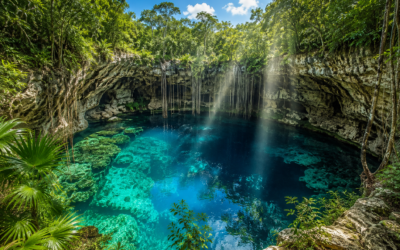
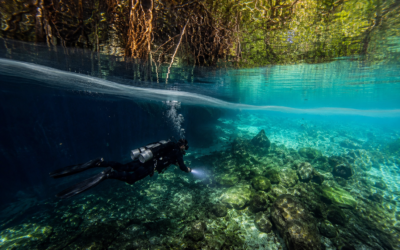
The Pit Cenote is one of the most spectacular cenote dives in Mexico and is widely regarded as one of the most visually stunning freshwater dives in the world.
Located between Tulum and Playa del Carmen on Mexico’s Riviera Maya, The Pit is famous for its incredible light beams, crystal-clear water, dramatic halocline, hydrogen sulfide cloud, and immense depth.
Unlike many cenotes, The Pit is a huge vertical sinkhole that descends into darkness, creating an underwater landscape unlike anywhere else on Earth.
For many divers, The Pit is the highlight of their entire trip to Mexico.
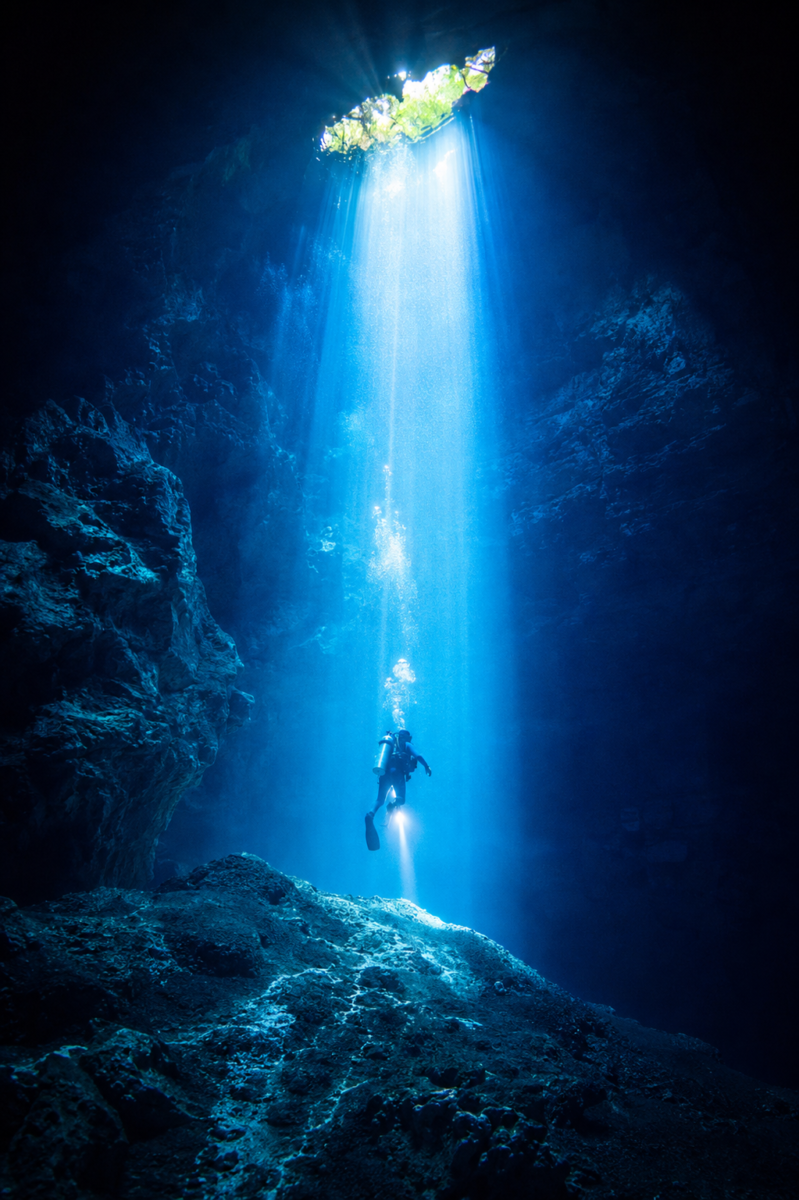
Table of Contents
What Is The Pit Cenote?
The Pit is an open cenote connected to the vast underground cave systems of the Yucatán Peninsula.
From the surface it appears relatively small, but beneath the water lies an enormous chamber extending to depths of approximately 119 meters (390 feet).
The combination of depth, visibility, geological formations, and unique light effects has made The Pit one of the most photographed cenote dives in the world.
Divers descend through crystal-clear freshwater before reaching a dramatic halocline and the famous hydrogen sulfide cloud that appears to float through the middle of the cenote like an underwater river of mist.
Where Is The Pit Cenote?
The Pit Cenote is located inside the Dos Ojos park area between Tulum and Playa del Carmen.
Travel Times:
- Approximately 20 minutes from Tulum
- Approximately 40 minutes from Playa del Carmen
- Approximately 90 minutes from Cancun Airport
The entrance is reached via Highway 307 and a short jungle road leading into the cenote park.
How Deep Is The Pit Cenote?
The Pit is one of the deepest accessible cenotes in Mexico.
- Maximum explored depth: approximately 119 meters (390 feet)
- Typical recreational dive depth: 30–40 meters (100–130 feet)
- Technical cave divers may explore deeper sections with appropriate training and equipment
Its immense depth creates the dramatic vertical perspective that makes the cenote so unique.
When looking down into the darkness below, it feels as though the bottom disappears into another world.
What Makes The Pit Cenote Famous?
Several unique features combine to make The Pit one of the most iconic dives in Mexico.
1. The Incredible Light Beams
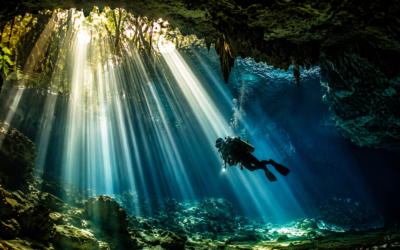
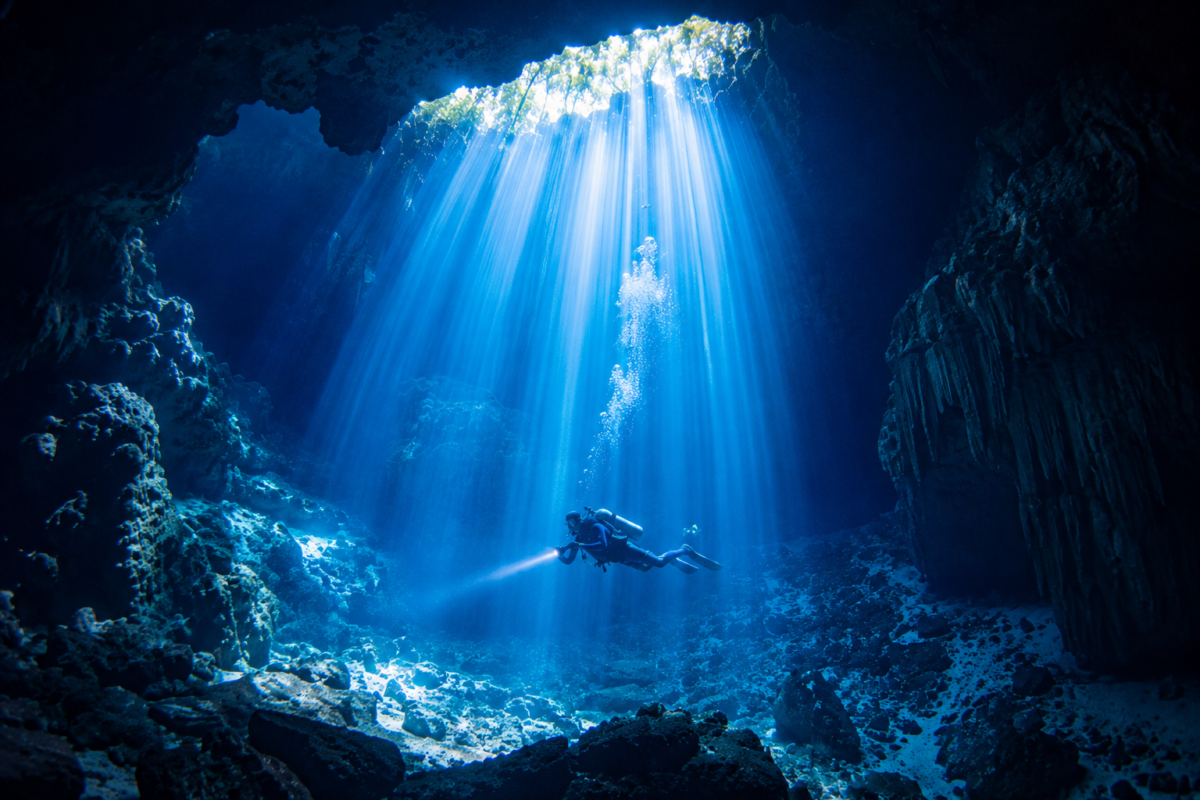
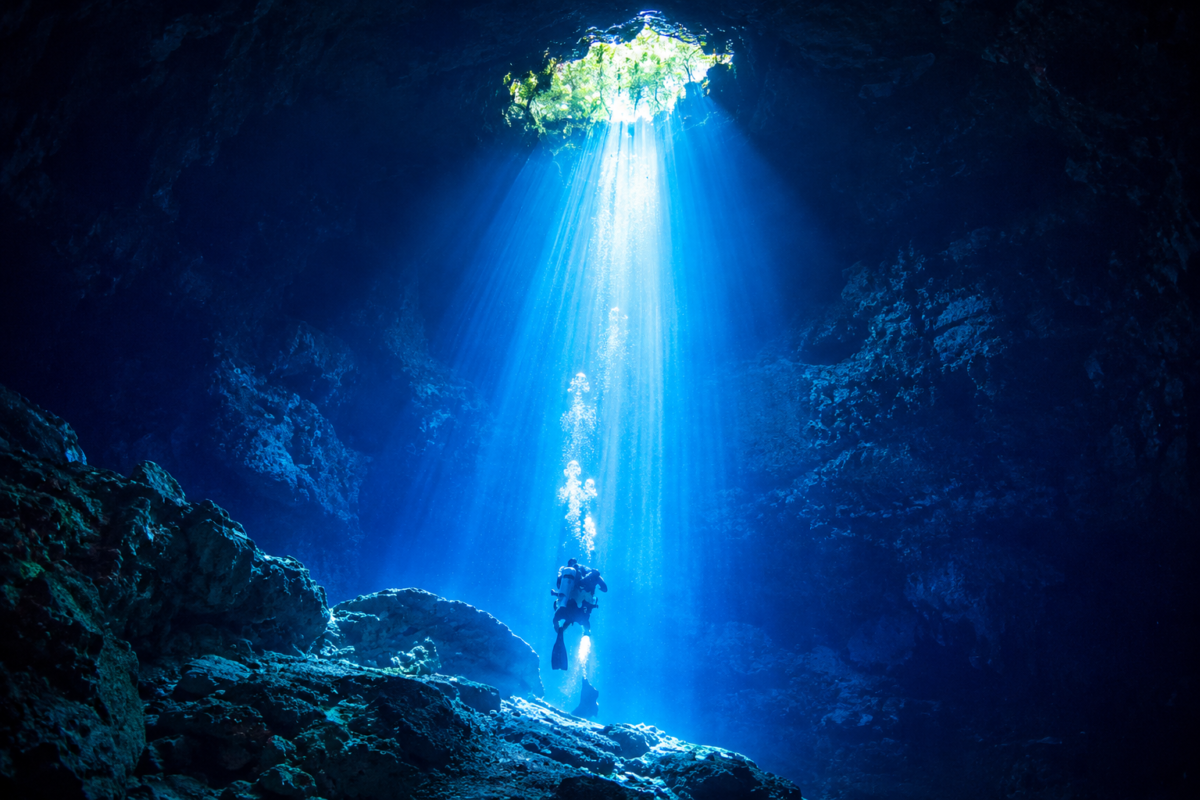
During sunny days, sunlight enters through the narrow opening at the surface and forms powerful shafts of light that descend through the water.
The effect is most impressive around midday when the sun is high overhead.
The beams appear almost solid, creating one of the most breathtaking underwater scenes found anywhere in the world.
For underwater photographers, this is one of the main reasons to dive The Pit.
2. The Halocline
At approximately 12–15 meters (40–50 feet), divers encounter a halocline.
A halocline is the layer where freshwater meets saltwater.
As you pass through it, the water appears distorted and blurry, almost like looking through liquid glass.
Once below the layer, visibility returns and the water becomes crystal clear again.
The effect is brief but unforgettable.
3. The Hydrogen Sulfide Cloud
At around 30 meters (100 feet), divers reach the famous hydrogen sulfide cloud.
This thick white layer resembles an underwater fog bank stretching across the cenote.
Dead vegetation trapped below the cloud slowly decomposes, creating the conditions that form the hydrogen sulfide layer.
Swimming above the cloud feels like flying over a ghostly river suspended beneath the water.
Descending through it creates one of the most surreal experiences available to recreational divers.
4. Ancient Rock Formations
Beyond the cloud, divers discover evidence of a time when the cave system was completely dry.
Massive stalactites hang from the ceiling while stalagmites rise from the floor.
These formations were created thousands of years before sea levels rose and flooded the cave system.
They provide a remarkable glimpse into the geological history of the Yucatán Peninsula.
Who Can Dive The Pit Cenote?
The Pit is generally considered an advanced recreational dive.
Most operators require:
- Advanced Open Water certification (or equivalent)
- Good buoyancy control
- Previous experience diving deeper sites
- Comfort in overhead-style environments
While technically not a cave dive, the depth and conditions make it unsuitable for inexperienced divers.
Best Time To Dive The Pit
The Pit can be dived year-round.
However, conditions are often at their best during sunny days when strong sunlight creates the famous light beams.
For photography, midday dives typically produce the most dramatic lighting effects.
The summer months often provide the strongest light beams due to the position of the sun overhead.
Why Divers Love The Pit
Few dive sites combine geology, history, science, and natural beauty in the way The Pit does.
During a single dive you can experience:
- Spectacular light beams
- A dramatic halocline
- The famous hydrogen sulfide cloud
- Ancient cave formations
- One of Mexico’s deepest cenotes
Every depth reveals something different, making The Pit feel like several dives combined into one unforgettable experience.
It is one of those rare dive sites that exceeds expectations no matter how many photographs you have seen beforehand.
Frequently Asked Questions About The Pit Cenote
How deep is The Pit Cenote?
The Pit reaches approximately 119 meters (390 feet), although recreational divers typically remain between 30 and 40 meters.
Is The Pit suitable for beginner divers?
No. Most operators require Advanced Open Water certification or equivalent experience.
What is the hydrogen sulfide cloud?
It is a naturally occurring layer created by decomposing organic material within the cenote.
What is a halocline?
A halocline is the transition layer where freshwater meets saltwater, causing a temporary visual distortion underwater.
What is the best time to dive The Pit?
Sunny days around midday usually provide the most impressive light beams.
Ready To Dive The Pit Cenote?
The Pit is one of the most extraordinary cenote dives in Mexico and a must-do experience for advanced divers visiting the Riviera Maya.
Whether you’re fascinated by geology, underwater photography, deep diving, or simply exploring unique places, The Pit delivers an experience unlike any other.
Book your dive today and discover why The Pit is considered one of the most iconic cenote dives in the world.