A Thrilling Cenote Adventure (By Special Request Only)
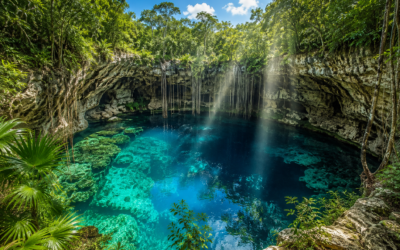
Cenote Calavera, known as the “Skull Cenote”, is one of the most unique and adventurous cenotes near Tulum. The name “Calavera” (Spanish for skull) comes from its three circular openings, which resemble a skull’s eyes and mouth when viewed from above.
This cenote is also called the “Temple of Doom”, drawing comparisons to Indiana Jones-style adventures. With dramatic cliff jumps, surreal halocline effects, and cavern diving, it’s an unforgettable cenote experience.
Table of Contents
📢 Important:
✔ Scuba diving at Cenote Calavera is available by special request only.
✔ Snorkeling and cave diving are still available.
Where is Cenote Calavera?
📍 Location: Just 1.7 km (1 mile) from Tulum, along the Coba Road.
📍 Travel Time: 5 minutes by car, 10 minutes by bicycle from Tulum town.
📍 Accessibility: Easily reached by car, taxi, or bike.
View Cenote Calavera on Google Maps
Why Visit Cenote Calavera?
Cenote Calavera is perfect for:
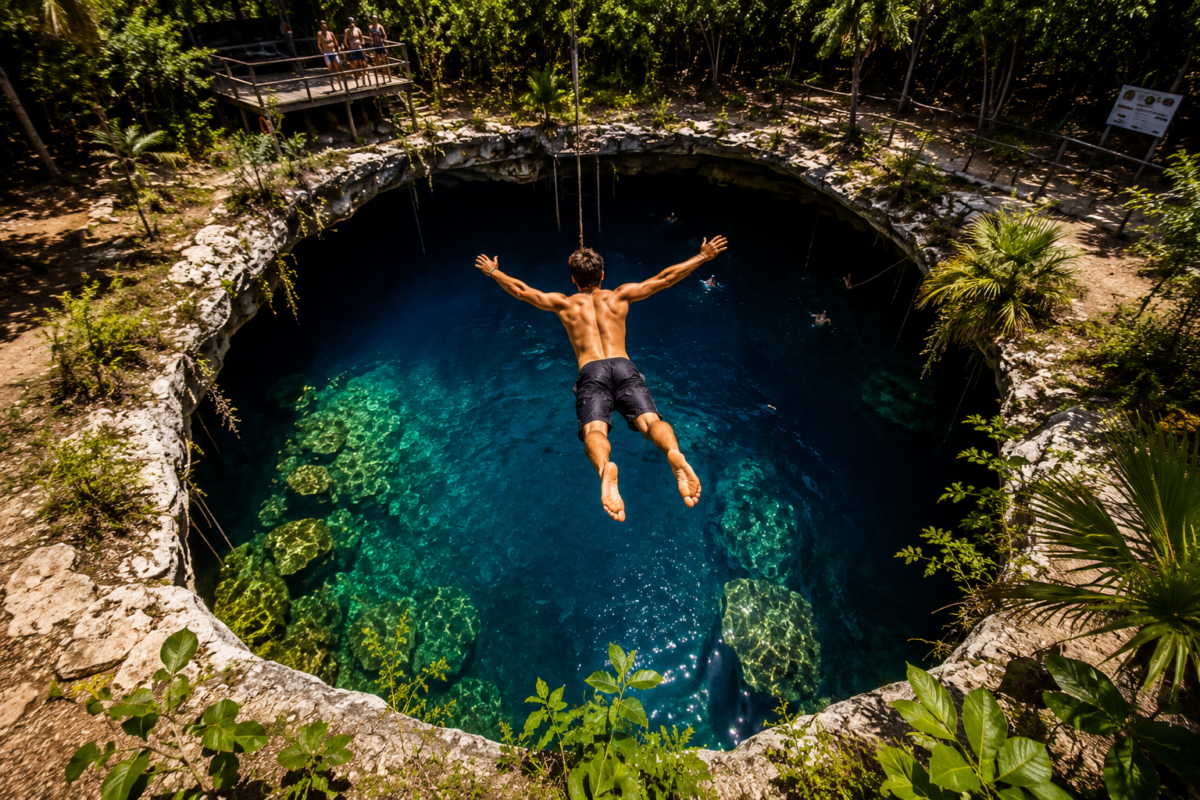
✔ Adventurous cliff jumps – Leap into crystal-clear waters from 2m (6ft) or higher.
✔ The halocline effect – See the stunning visual distortion where fresh and saltwater meet.
✔ Cavern diving – Swim through ancient rock formations, fossils, and underwater chambers.
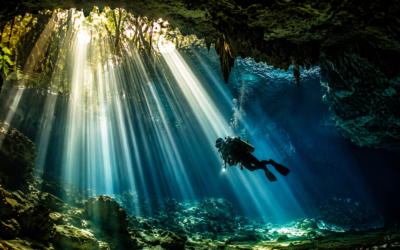
✔ Light beams & reflections – Watch sunlight dance through the cenote’s openings, creating a surreal glow underwater.
Scuba Diving at Cenote Calavera (Special Request Only)
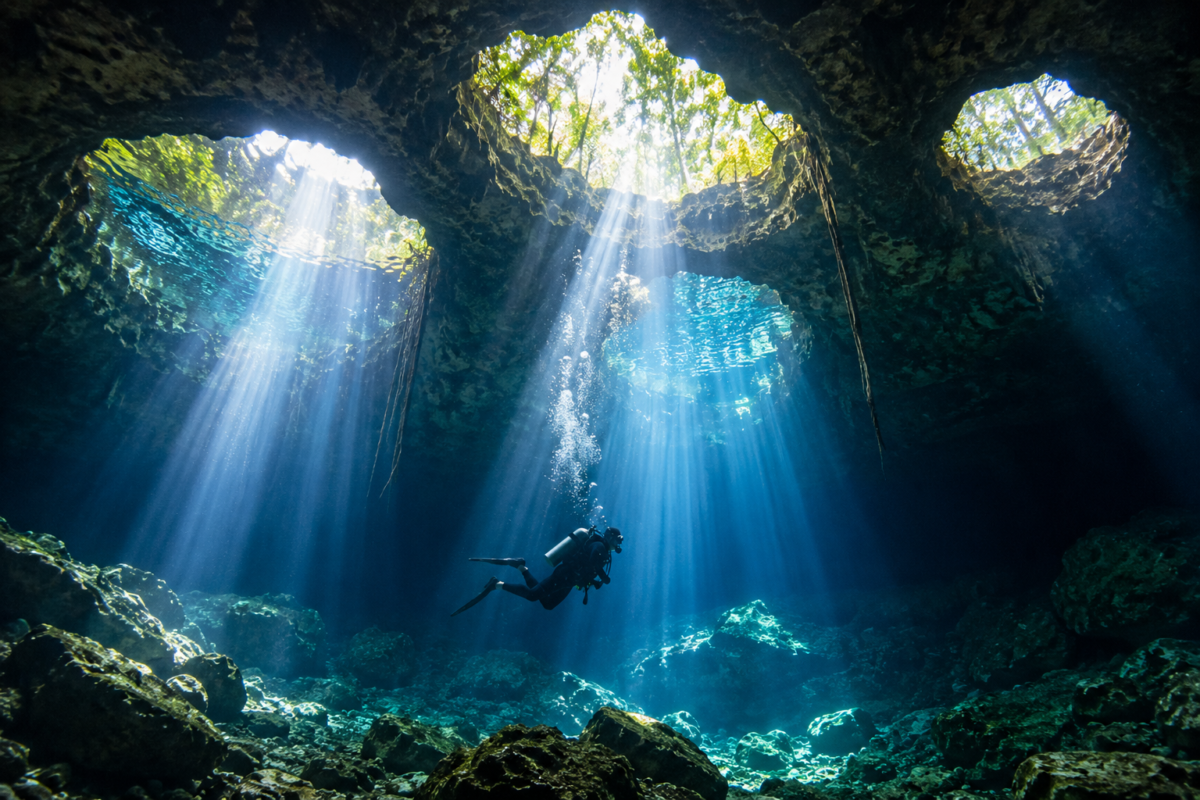
Cenote Calavera is one of the most unique cavern dives in Tulum. The dive takes you into a spacious underground chamber where sunlight filters through the openings, creating stunning green and blue hues.
✔ Max Depth: 19m (62ft).
✔ Certification Required: Open Water or higher (Cavern Diving experience recommended).
✔ Features: Halocline layers, fossilized formations, and eerie cave passages.
🔹 Why is it called the Temple of Doom?
The dark, cavernous atmosphere and the thrilling jump entry make this cenote feel like something straight out of an adventure movie.
💡 Due to limited availability, diving here is only available by special request.
👉 Contact us for special bookings.
Snorkeling at Cenote Calavera
Not a diver? No problem! Cenote Calavera is still great for snorkeling.
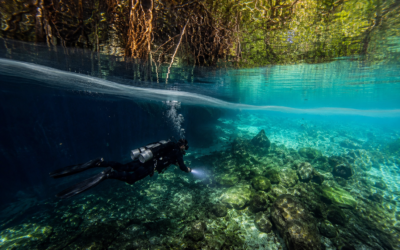
✔ Swim through the skull-shaped openings and enjoy the clear, blue water.
✔ Float above divers and watch their bubbles rise through the beams of light.
✔ See small fish and freshwater creatures in the open water zone.
The Halocline Phenomenon – A Natural Wonder
At Cenote Calavera, you can witness one of the most fascinating underwater effects—the halocline.
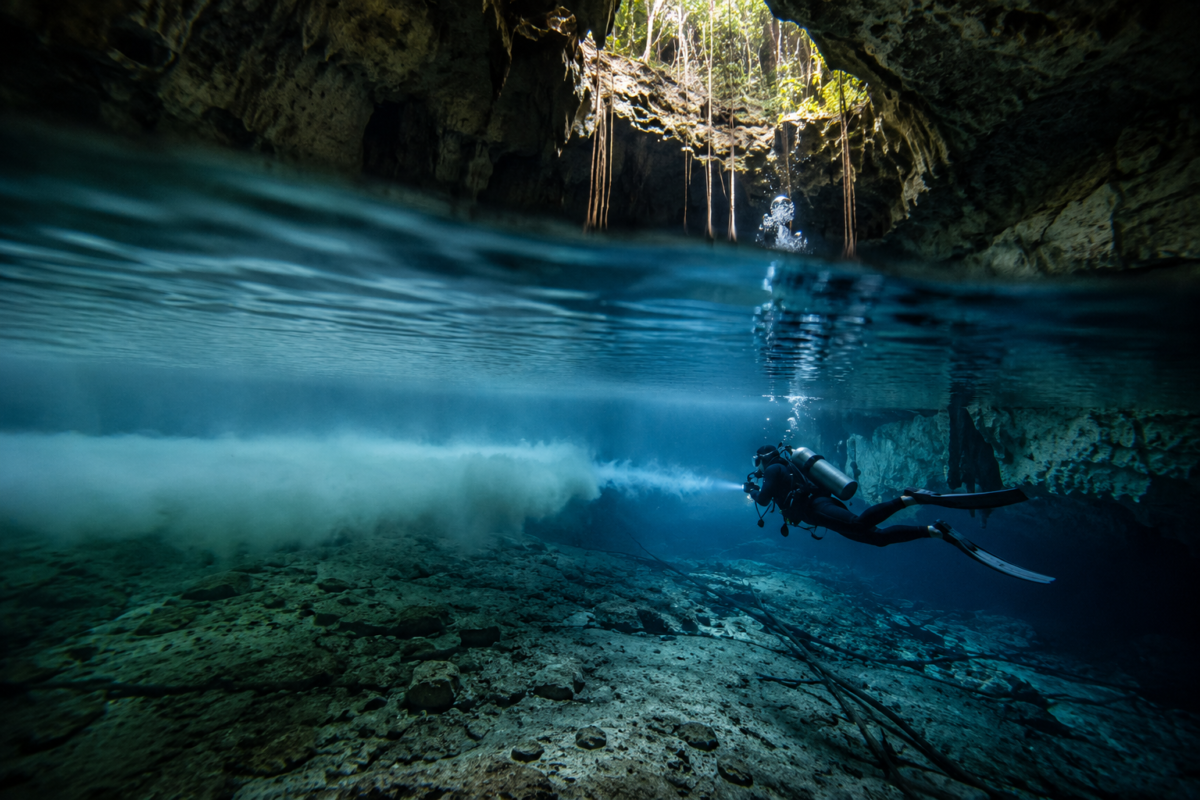
🔹 What is a halocline? It’s where freshwater and saltwater meet, creating a wavy, shimmering effect as light bends through the layers.
🔹 What does it look like? Objects appear distorted and blurry when you pass through it—like a mirage underwater.
🔹 Where does the saltwater come from? The cenote is connected to the underground rivers that flow to the ocean.
This effect makes Cenote Calavera diving and snorkeling truly unique.
Best Time to Visit Cenote Calavera
✔ Open Daily: 9:00 AM – 5:00 PM.
✔ Best Light for Diving & Snorkeling: Late morning to early afternoon when the sun is high.
✔ Special Request Diving: Must be pre-booked in advance due to limited availability.
Safety Tips for Cenote Calavera
✔ Be cautious at the entrance – The rocks can be slippery. Wear sturdy footwear.
✔ Mind your jump – Look below to make sure no divers are surfacing before jumping in.
✔ Respect the cenote – Use biodegradable sunscreen and avoid touching formations.
Read about the world’s longest underwater cave systems
Cenote Calavera Diving & Snorkeling Tours
🚀 By Special Request Only: Scuba Diving at Cenote Calavera
🌊 Available: Snorkeling & Cave Diving
📍 Tour Combinations:
🔹 Car Wash & Calavera
🔹 Angelita & Calavera
🔹 Angelita, Calavera & Car Wash
Cenote Calavera Depth Guide
One of the most common questions visitors ask is: “How deep is Cenote Calavera?”
The cenote itself reaches a maximum depth of approximately 19 metres (62 feet), making it suitable for certified scuba divers while remaining accessible to snorkellers on the surface.
The cavern area contains a mixture of shallow platforms, open-water sections, and deeper areas where divers can experience the famous halocline effect. Visibility is usually excellent, often exceeding 20 metres.
Cenote Calavera Depth Overview
- Maximum Depth: 19m (62ft)
- Average Diving Depth: 10–15m (33–50ft)
- Snorkelling Depth: Surface to 5m (16ft)
- Certification Required for Diving: Open Water Diver or higher
The moderate depth, combined with dramatic light effects and easy access, makes Cenote Calavera one of the most popular diving cenotes near Tulum.
Cenote Calavera Entrance Fee & Prices
Cenote Calavera charges an entrance fee for both snorkellers and divers.
Prices can change throughout the year, so it is always worth checking before visiting.
Typical costs include:
- Cenote entrance fee
- Snorkelling equipment rental
- Scuba diving guide fees
- Transportation from Tulum
- Photography services
Visitors joining a guided cenote diving tour will normally have entrance fees included in the tour price.
Because Calavera is located only a few minutes from Tulum town, it is often combined with other nearby cenotes such as Angelita or Car Wash for a full day of diving.
Cenote Calavera Opening Hours
Cenote Calavera is generally open daily.
Typical Opening Hours
- Opening Time: 9:00 AM
- Closing Time: 5:00 PM
The best time to visit is usually between 10:00 AM and 2:00 PM, when sunlight shines directly through the openings in the ceiling.
During these hours, the underwater scenery becomes particularly dramatic as beams of light illuminate the cavern below.
Early mornings are often quieter, while midday tends to provide the best photography conditions.
Why Does Cenote Calavera Look Like a Skull?
The name “Calavera” means “Skull” in Spanish.
When viewed from above, the cenote’s three circular openings resemble the eyes and mouth of a human skull.
One opening is large enough for divers and snorkellers to enter comfortably, while the other two smaller openings create the distinctive skull-like appearance that gave the cenote its name.
This unusual natural formation has made Cenote Calavera one of the most photographed cenotes in Mexico.
Many visitors arrive specifically to jump through the larger opening and photograph the famous skull-shaped entrance from above.
Because of its unique appearance, Cenote Calavera is often referred to as:
- Skull Cenote
- The Skull Cenote Tulum
- The Temple of Doom Cenote
Why Is Cenote Calavera Called the Temple of Doom?
Cenote Calavera earned the nickname “Temple of Doom” because entering the cenote feels like stepping into an ancient adventure film.
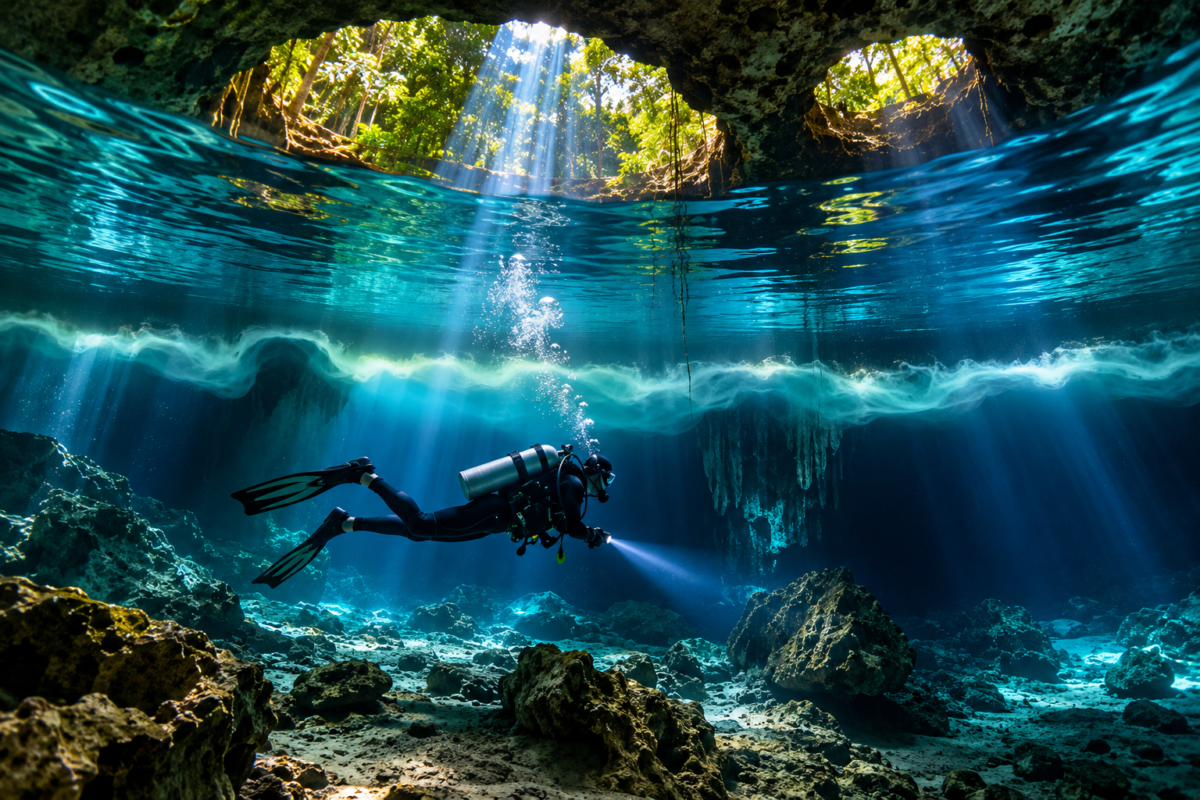
Visitors descend into a hidden underground world through openings in the limestone ceiling before entering a vast chamber filled with crystal-clear water.
The combination of dark cavern walls, dramatic light rays, fossils embedded in the limestone, and the famous jump entrance creates an atmosphere that many people compare to an Indiana Jones movie.
Unlike some cenotes that feature wide-open swimming areas, Calavera feels mysterious and slightly intimidating when viewed from the surface.
The nickname became popular among divers and travellers who felt the cenote resembled a forgotten underground temple hidden beneath the Yucatán jungle.
Despite the dramatic name, the cenote is perfectly safe when visited responsibly and remains one of the most accessible cavern diving sites near Tulum.
Today, many visitors know Cenote Calavera more by its nickname “Temple of Doom” than by its official name.
Cenote Calavera Photos & Photography Tips
Cenote Calavera is one of the most photogenic cenotes in the Riviera Maya.
The famous skull-shaped openings, crystal-clear water, and stunning light beams make it a favourite location for underwater photographers.
Best Photography Opportunities
- The skull-shaped openings viewed from above
- Cliff-jump action shots
- Sun rays entering through the ceiling
- Divers silhouetted beneath the openings
- Halocline effects in the cavern
Best Time for Photos
The strongest light rays are normally visible between:
- 10:30 AM and 1:30 PM
Photographers visiting during these hours can often capture spectacular beams of sunlight penetrating the water and illuminating the cavern below.
Cenote Calavera vs Dos Ojos
Both Cenote Calavera and Dos Ojos are popular cenotes near Tulum, but they offer very different experiences.
Cenote Calavera
✔ Adventure atmosphere
✔ Cliff-jump entrance
✔ Strong halocline effect
✔ Open cavern environment
Dos Ojos
✔ Longer cavern routes
✔ Crystal-clear visibility
✔ More extensive cave system
✔ Ideal for cavern tours
If you’re looking for adventure and unique photographs, Calavera is often the better choice. If you want longer cavern dives with spectacular formations, Dos Ojos is hard to beat.
Cenote Calavera vs Angelita
Angelita and Calavera are often combined on the same diving day.
Cenote Calavera
✔ Cavern dive
✔ Maximum depth 19m
✔ Light effects
✔ Suitable for Open Water divers
Cenote Angelita
✔ Deep sinkhole cenote
✔ Famous hydrogen sulphide cloud
✔ Maximum depth over 60m
✔ Advanced divers recommended
Angelita offers one of the most surreal underwater landscapes in the world, while Calavera provides a more accessible cavern diving experience.
Cenote Calavera vs The Pit
The Pit and Calavera are two of Tulum’s most famous diving cenotes.
Cenote Calavera
✔ Easier access
✔ Jump entrance
✔ Cavern environment
✔ Suitable for newer cenote divers
The Pit
✔ Massive vertical shaft
✔ Spectacular light beams
✔ Deep diving profile
✔ One of Mexico’s most famous cenotes
Many divers choose Calavera for its adventure atmosphere and The Pit for its dramatic depth and visual impact.
Plan Your Visit to Cenote Calavera
Cenote Calavera is one of the most unique and adventurous cenotes in Tulum. Whether you’re:
✔ Jumping into the Skull Cenote for the first time.
✔ Experiencing the surreal beauty of the halocline effect.
✔ Diving into a cavern full of history and mystery.
👉 Book Your Cenote Adventure Here.
FAQ
What does “Cenote Calavera” mean?
“Calavera” is the Spanish word for “skull.” The cenote gets its name from the three circular openings in the ceiling that resemble a skull’s eyes and mouth when viewed from above.
Why is Cenote Calavera called the Temple of Doom?
The nickname “Temple of Doom” comes from the dramatic jump entrance, dark cavern atmosphere, and adventure-movie feel of the site. Many visitors compare entering the cenote to stepping into an Indiana Jones-style underground temple.
How deep is Cenote Calavera?
The maximum depth is approximately 19 metres (62 feet), although most snorkelers and recreational divers spend their time in the shallower sections around the main chamber.
Is Cenote Calavera good for beginners?
Yes. Snorkelers of all experience levels can enjoy the cenote. Certified Open Water divers can also explore the cavern area with an appropriate guide.
Can you jump into Cenote Calavera?
Yes. Jumping through one of the skull-shaped openings is one of the cenote’s most famous attractions. Visitors should always check below before jumping and follow local safety guidelines.
Is Cenote Calavera suitable for snorkeling?
Absolutely. The open water, excellent visibility, sunbeams, and unique skull-shaped openings make it one of the most popular snorkeling cenotes near Tulum.
What is the halocline at Cenote Calavera?
A halocline occurs where freshwater and saltwater meet. At Cenote Calavera, divers can witness a shimmering visual distortion that looks like an underwater mirage.
How far is Cenote Calavera from Tulum?
Cenote Calavera is located approximately 1.7 km (1 mile) from Tulum town on the road towards Coba. It can be reached in around 5 minutes by car or 10 minutes by bicycle.
What are the opening hours for Cenote Calavera?
Opening hours may vary throughout the year, but the cenote is generally open daily from morning until late afternoon. It’s always best to check current hours before visiting.
What should I bring to Cenote Calavera?
Visitors should bring swimwear, a towel, drinking water, biodegradable sunscreen, and cash for entrance fees. Divers should also bring their certification cards and logbooks if required.